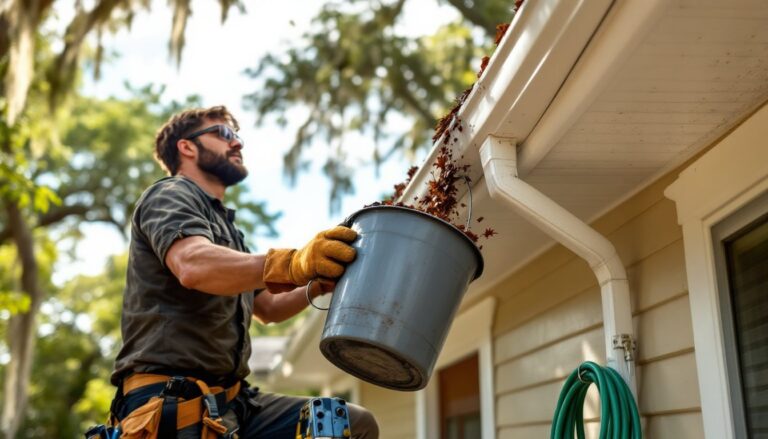
Marietta’s lush canopy of oaks, pines, and maples makes for beautiful neighborhoods, and gutters that fill up fast. Between spring pollen storms, summer thunderstorms, and fall leaf drops, your gutters work overtime to channel thousands of gallons of water away from your foundation. When they clog, that water has nowhere to go but into your soffits, fascia, and basement. Regular gutter maintenance isn’t optional in North Georgia’s climate: it’s structural insurance. This guide walks through why Marietta homeowners can’t skip gutter cleaning, how often the job needs doing, and whether to climb the ladder yourself or call in pros.
Table of Contents
ToggleKey Takeaways
- Gutter cleaning in Marietta should occur at least twice yearly (May and November), with homes near heavy tree cover requiring three to four cleanings annually to prevent water damage and foundation cracks.
- Clogged gutters cause cascading damage including roof rot, foundation saturation, basement flooding, and attract mosquitoes, making preventive gutter cleaning essential structural insurance in North Georgia’s climate.
- DIY gutter cleaning requires proper safety equipment (fiberglass ladder, rubber gloves, safety glasses) and careful technique, but two-story homes and steep rooflines are best left to professional gutter cleaners for liability and safety reasons.
- Professional gutter cleaning services in Marietta range from $100–$275 depending on home size and complexity, and typically include cleaning, downspout clearing, adjustments, and inspection reports.
- Pine needles, oak leaves, and sweetgum seed balls clog gutters and downspouts year-round in Marietta, requiring homeowners to inspect gutters after storms and address active overflow immediately to prevent foundation splash.
- Check downspout discharge to ensure water flows at least six feet from your foundation, as Marietta’s moisture-retaining red clay soil amplifies damage from close water discharge.
Why Gutter Cleaning Matters for Marietta Homeowners
Clogged gutters don’t just overflow, they cause cascading damage that gets expensive fast. When debris blocks downspouts, rainwater backs up under shingles, rotting roof decking and triggering interior leaks. That same overflow pours directly against foundation walls, saturating the soil and creating hydrostatic pressure that cracks concrete and floods crawlspaces.
Marietta’s red clay soil compounds the problem. Unlike sandy soils that drain quickly, Georgia clay holds moisture against foundations for days after heavy rain. Persistent saturation leads to foundation settlement, cracked slabs, and basement seepage, repairs that routinely hit five figures.
Standing water in gutters also becomes a mosquito breeding ground within 48 hours, especially during Marietta’s humid summers. The weight of waterlogged debris, a 20-foot gutter section can hold 50+ pounds of wet leaves, pulls fasteners loose and bends aluminum or vinyl gutters out of alignment. Once gutters sag, they can’t pitch properly toward downspouts, creating permanent low spots that pool water even when clean.
Woodpeckers and squirrels exploit rotted fascia boards behind clogged gutters, creating entry points into attics. Ice dams aren’t common in Marietta, but the few hard freezes each winter can turn water-filled gutters intoExpandING ice that cracks seams and pulls joints apart.
The roof-to-foundation damage chain starts with a $50 cleaning but ends with water damage repairs that insurance may not fully cover if neglect is evident. Prevention beats restoration every time.
How Often Should You Clean Gutters in Marietta’s Climate?
Most Marietta homes need gutter cleaning at least twice per year, late spring (May) and late fall (November). Homes near heavy tree cover require three or four cleanings annually.
Spring cleaning addresses the February–April pollen deluge. Pine pollen especially forms a cement-like sludge when wet, clogging downspouts and forming dams that trap later debris. Oak catkins and seed pods from maples add bulk through May.
Fall is the heavy-lift season. Mature oaks drop leaves from October through December, with peak drop usually hitting mid-November. A single large oak can shed 200,000+ leaves, many of which end up in your gutters and your neighbors’. If you’ve got sweetgums dropping spiky seed balls, add a December cleaning, those balls jam downspout elbows and won’t break down.
Homes with pine trees overhead need quarterly cleanings. Pine needles slip through gutter guards and form dense mats that block water flow while appearing deceptively thin from below.
After severe storms, especially summer thunderstorms with high winds, inspect gutters for shingle grit, broken twigs, and displaced debris. Marietta’s occasional tropical storm remnants can dump months’ worth of leaf litter in a single afternoon.
If you notice water spilling over gutter edges during rain, don’t wait for the next scheduled cleaning. That’s active overflow, meaning you’re already getting fascia exposure and potential foundation splash. Same goes if you see plants growing from gutters, roots will wedge under shingles and compromise roof integrity.
DIY Gutter Cleaning: Step-by-Step Guide for Marietta Homes
Cleaning gutters yourself saves $100–$250 per visit, but it requires safe ladder work and a tolerance for slimy decomposed leaves. Most single-story homes are manageable: two-story homes with steep rooflines are better left to pros.
Essential Tools and Safety Equipment
Start with a sturdy extension ladder rated for your weight plus 25 pounds of tool load. Fiberglass ladders don’t conduct electricity if you contact overhead power lines (common near older Marietta homes). Set the ladder on firm, level ground, never on soft soil or pine straw. Use a ladder stabilizer or standoff bracket to keep the ladder off gutters and prevent denting aluminum.
Wear heavy-duty rubber gloves, the kind that extend past your wrists. Gutter sludge contains bacteria, mold spores, and occasionally wasp nests or rodent droppings. Safety glasses are non-negotiable: debris falls back at your face when you scoop.
Grab a gutter scoop (a plastic trowel with a curved edge that matches gutter profiles) or a small hand trowel. A five-gallon bucket with a hook or bungee cord lets you haul debris up the ladder instead of dropping it on landscaping. A garden hose with a spray nozzle finishes the job, bring it up the ladder or have a second person hand it up.
Optional but helpful: a leaf blower for dry debris (use before rain, not after), and a plumber’s snake or pressure washer attachment for stubborn downspout clogs.
The Cleaning Process
1. Start near a downspout. Work away from it initially so you push debris toward the outlet as you circle back.
2. Scoop out bulk debris by hand or with the gutter scoop. Drop it in your bucket, not onto plants below. Compressed wet leaves are heavier than they look, pace yourself.
3. Flush gutters with the hose once bulk debris is removed. Watch the flow, water should run briskly toward downspouts without pooling. If gutters pond, they’ve lost pitch (common with loose hangers). Re-slope by adjusting hanger screws or adding hangers: gutters need about ¼ inch of drop per 10 feet.
4. Clear downspouts from the top. Blast water down each downspout. If water backs up, there’s a clog in the elbow or underground extension. Try the plumber’s snake from below, or disconnect the elbow and flush from both directions. Avoid using a pressure washer inside gutters, it can blow seams apart.
5. Inspect while you’re up there. Check for loose fasteners, separated seams, rust spots (on steel gutters), or cracks in vinyl corners. Reseal small leaks with gutter sealant from the inside. Tighten loose screws into solid fascia board, if the wood is spongy, you’ve got rot that needs repair before reattaching.
6. Check downspout discharge. Make sure extensions direct water at least six feet from the foundation. In Marietta’s clay soil, closer discharge guarantees foundation moisture problems.
On homes with gutter cleaning services available nearby, homeowners often tackle the easy first-story sections and hire out the steep or high reaches.
When to Hire Professional Gutter Cleaners in Marietta
Some situations call for pros, not ladders and gloves. Two-story homes with gutters 20+ feet up put you at serious fall-risk heights, pros carry commercial liability insurance and use safety harnesses or scaffolding. If your home has a steep roof pitch (8:12 or greater, common on Craftsman and Victorian styles around Marietta Square), ladder stabilization gets tricky and roof access may be necessary.
Physical limitations matter. Gutter cleaning requires climbing up and down a ladder 15–30 times, reaching overhead repeatedly, and maintaining balance with a bucket in one hand. If you’ve got balance issues, joint problems, or you’re simply uncomfortable with heights, the $150–$250 service call is cheap compared to an ER visit.
Homes with gutter guards or screens installed often still need professional cleaning, the guards prevent large debris but let pine needles, shingle grit, and small seeds through. Removing and reinstalling some guard systems voids warranties if not done by certified installers.
If you find significant damage during inspection, multiple separated seams, fascia rot, or gutters pulling away from the roofline, stop and call a gutter contractor. Temporary repairs won’t hold, and cleaning damaged gutters can make failures worse. These are symptoms of either installation problems or long-term neglect requiring replacement sections or complete re-hanging.
Professional services in Marietta typically include cleaning, flushing downspouts, minor adjustments, and a post-service inspection report with photos. Many offer seasonal contracts (two or four cleanings per year) at discounted rates. When comparing quotes, verify they include downspout clearing and haul-away, some budget services only scoop gutters and leave debris on the ground.
Est cost ranges for Marietta: $100–$175 for a single-story ranch, $175–$275 for a two-story colonial, more for homes over 3,000 square feet or with complex rooflines. Prices fluctuate with demand, book ahead of peak fall season to avoid premium rates. For detailed cost breakdowns by home size, check recent local estimates before committing.
Conclusion
Gutter cleaning in Marietta isn’t glamorous, but it’s one of the highest-return maintenance tasks a homeowner can tackle, or delegate. Whether you’re scooping leaves yourself twice a year or scheduling a pro service, the goal is the same: keep water moving away from your roof and foundation before it finds ways to move in. Mark your calendar now for May and November, and you’ll stay ahead of North Georgia’s seasonal debris cycle.