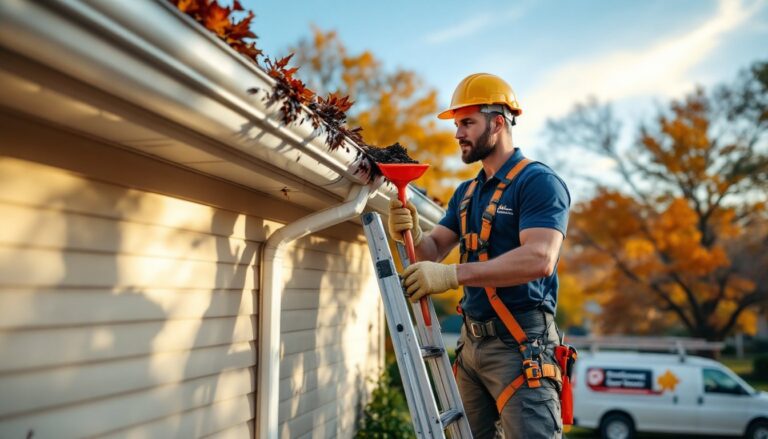
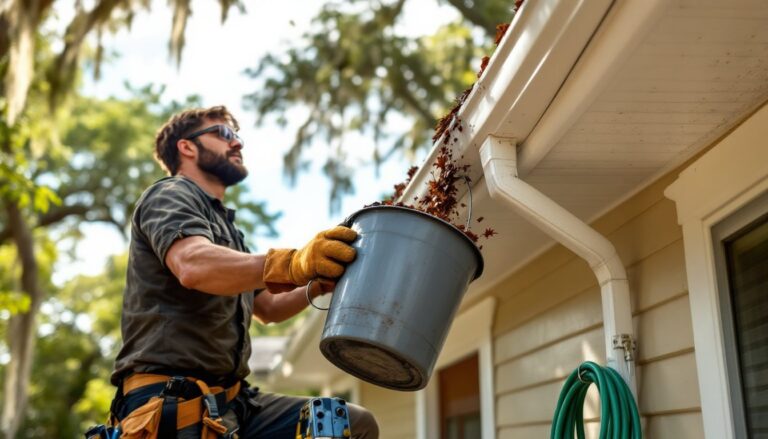
Louisville homeowners know that gutters take a beating. Between the city’s humid summers, heavy spring rains, and autumn leaf dumps from mature oaks and maples, clogged gutters aren’t just an eyesore, they’re a fast track to foundation damage, basement flooding, and rotted fascia boards. A single downpour through blocked downspouts can dump hundreds of gallons against your foundation instead of away from it. Most homeowners wait until water’s pouring over the sides or plants are sprouting from the gutter line. By then, you’re often looking at repairs beyond a simple cleaning. This guide walks through why Louisville’s climate demands regular gutter maintenance, when to schedule cleanings, how to tackle the job yourself, and when it makes sense to hire help.
Table of Contents
ToggleKey Takeaways
- Gutter cleaning in Louisville is essential twice yearly (spring and fall) due to the city’s 44-inch annual rainfall and heavy autumn leaf coverage, which prevent foundation damage, basement flooding, and costly fascia rot.
- Clogged gutters cause foundation cracks through wet-dry soil cycles, ice dams in winter, mosquito breeding grounds, and water damage running into thousands of dollars in repairs.
- DIY gutter cleaning requires proper safety equipment, an extension ladder set at a 4:1 ratio, and systematic debris removal starting at downspouts, followed by flushing to check water flow.
- Warning signs between scheduled cleanings include water spilling over gutter edges, sagging sections, plant growth in gutters, and siding stains—clear signals to clean immediately regardless of season.
- Professional gutter cleaning in Louisville costs $100–$250 for single-story homes and $200–$400 for two-story homes, making it worthwhile for steep roofs, multi-story houses, or homes with extensive tree coverage.
- Consistent gutter maintenance, whether DIY or professional, is a high-return investment that saves homeowners thousands in foundation repairs and water damage over time.
Why Gutter Cleaning Matters for Louisville Homeowners
Louisville sits in USDA hardiness zone 6b, with an average annual rainfall around 44 inches spread fairly evenly across the year. That’s above the national average, and it means gutters work overtime. When gutters clog, water doesn’t disappear, it finds the path of least resistance, usually straight down your siding or into the soil around your foundation.
Foundation damage is the big one. Soil in the Louisville area often has a clay component that expands when wet and contracts when dry. Repeated saturation from overflowing gutters accelerates this cycle, leading to foundation cracks and settling. Repairing foundation damage runs thousands of dollars, compared to the cost of a ladder and an afternoon.
Fascia and soffit rot happens fast when gutters overflow backward. Water sits against wood trim, and once rot starts, you’re looking at carpentry work plus repainting. The freeze-thaw cycles Louisville sees in winter make this worse, water gets into cracks, freezes, expands, and splits the wood.
Clogged gutters also create ice dams in winter. When snow melts off the roof and hits a blocked, frozen gutter, it refreezes. Ice builds up, forcing meltwater under shingles and into the attic. Ice dam removal and interior water damage repair aren’t cheap.
Finally, standing water in gutters is a mosquito nursery. Louisville’s humid summers already make mosquitoes a nuisance: you don’t need to give them a breeding ground bolted to your roofline.
When to Clean Your Gutters in Louisville’s Climate
The standard recommendation is twice a year, spring and fall, but Louisville homeowners often need a third cleaning mid-summer if they have heavy tree coverage.
Spring cleaning (April-May): After the oak and maple flowers drop and before the heavy May thunderstorms hit. Spring storms in Louisville can dump an inch or more in an hour. You want gutters clear before that happens.
Fall cleaning (October-November): After leaf drop but before the first hard freeze. Louisville’s fall foliage peaks in late October, and gutters can go from clear to completely packed in two weeks if you’ve got mature deciduous trees. Cleaning too early means you’ll need to do it again: too late and you risk ice forming in debris-filled gutters.
Mid-summer check (July): If you have oak, poplar, or sweetgum trees, check gutters in mid-summer. Seed pods, twigs from storms, and early leaf drop from drought stress can create blockages before fall.
Watch for warning signs between scheduled cleanings: water spilling over the gutter edges during rain, sagging gutter sections (indicating weight from debris and standing water), plant growth sprouting from the gutter line, or staining on siding below the gutters. Any of these means it’s time to get the ladder out, regardless of season.
DIY Gutter Cleaning: Tools and Step-by-Step Process
Essential Tools and Safety Equipment
Gutter cleaning isn’t complicated, but working on a ladder near the roofline comes with real risks. Gear up properly before you start.
Safety equipment:
- Safety glasses or goggles: Mandatory. Gutter sludge contains bacteria, mold spores, and decomposed organic matter. One handful to the face and you’ll understand why.
- Heavy-duty work gloves: Latex-coated or rubberized. You’ll be handling sharp debris, rusted nails, and wasp nests.
- Sturdy extension ladder: Must extend at least 3 feet above the gutter line. For a typical single-story ranch in Louisville, a 20-foot ladder works: two-story homes need 28 feet or more. Set at a 4:1 ratio (base 1 foot out for every 4 feet of height).
- Ladder stabilizer (optional but recommended): Prevents the ladder from denting gutters and gives a wider, more stable base.
- Non-slip footwear: Wet roofs and ladders are slick. Work boots with good tread.
Cleaning tools:
- Gutter scoop or garden trowel: Plastic gutter scoops fit the channel shape better than trowels and won’t scratch aluminum gutters.
- 5-gallon bucket with S-hook: Hang it from the ladder to collect debris instead of tossing it on the ground.
- Garden hose with spray nozzle: For flushing downspouts after removing debris.
- Plumber’s snake (optional): If downspouts are packed solid.
- Leaf blower with gutter attachment (alternative method): Works for dry debris but makes a mess and doesn’t clean wet sludge.
Cleaning Your Gutters: A Detailed Walkthrough
Step 1: Prep and position. Pick a clear day, wet gutters are slippery and heavy. Let a helper know you’re working on a ladder. Position your ladder on firm, level ground. Never lean a ladder against the gutter itself: use a standoff or place it against the fascia board below the gutter.
Step 2: Remove large debris. Starting at a downspout (or end cap if no downspout nearby), scoop out leaves, twigs, and sludge. Work in 3- to 4-foot sections before moving the ladder. Drop debris into your bucket, not onto landscaping, gutter sludge can smother plants. Many Louisville homeowners find wet oak leaves matted into a solid mass: you’ll need to pull these out in clumps.
Step 3: Check for damage while you work. Look for rust spots on steel gutters, cracks or splits in seams, loose hangers or spikes, and separated joints. Small repairs are easier to make now than after water damage shows up inside. If you see sagging sections, the hangers may have pulled loose from the fascia, this usually means the wood is soft or the fasteners weren’t into a rafter tail.
Step 4: Flush the gutters and downspouts. After removing debris from a full gutter run, use the garden hose to flush from the high end toward the downspout. Water should flow freely. If it pools or drains slowly, the gutter may not be pitched correctly (should slope 1/4 inch per 10 feet toward downspouts).
If water backs up at the downspout, there’s a clog. Try flushing from the bottom up with the hose. If that doesn’t work, disassemble the downspout elbow at the bottom or feed a plumber’s snake down from the top. Packed downspouts often contain a solid plug of decomposed leaves and shingle grit.
Step 5: Inspect from the ground. Once everything’s reassembled, step back and check gutter alignment. All sections should be snug against the fascia with no visible sag. Run the hose one more time and watch for leaks at seams or end caps.
Optional: Install gutter guards. If you’re tired of twice-yearly cleanings, consider guards. Mesh screens, foam inserts, and reverse-curve systems all reduce debris buildup. None are 100% maintenance-free, you’ll still need occasional cleaning, but they extend intervals and reduce the amount of sludge. Mesh screens work well in Louisville’s heavy leaf environment but can trap small seeds and need brushing off. Avoid the cheapest plastic snap-in guards: they degrade in UV within two years.
Hiring Professional Gutter Cleaning Services in Louisville
Not everyone wants to spend a Saturday on a ladder, and some homes aren’t safe for DIY work. Three-story houses, steeply pitched roofs, or homes surrounded by mature trees may be better left to professionals.
When to hire help:
- Your home is two stories or higher, especially if the roofline is steep or complex.
- You have physical limitations or aren’t comfortable on ladders.
- You don’t own a tall-enough ladder (don’t borrow an extension ladder if you’ve never used one).
- The home has extensive tree coverage requiring cleanings more than twice a year.
- You’ve found damage that needs repair, many gutter companies offer cleaning and minor repair as a package.
What to expect from pros: Professional gutter cleaning typically includes debris removal, downspout flushing, and a basic visual inspection. Most companies will note obvious problems like loose hangers, leaks, or fascia damage. Some offer photo documentation before and after. The process usually takes 1-3 hours depending on home size and debris level.
Cost in Louisville: As of 2026, expect to pay $100–$250 for a single-story, 1,500–2,000 sq ft home, and $200–$400 for two stories. Costs rise if gutters haven’t been cleaned in years or if significant downspout clogs require extra work. Prices vary by company and season, late fall is peak season, so booking in early October may cost more than scheduling in mid-November. According to platforms like HomeAdvisor, the national average trends higher, but Louisville’s market remains competitive.
Choosing a service: Look for companies with liability insurance and workers’ comp. Ask if the quote includes downspout flushing and haul-away (some companies dump debris in your yard). Check if they offer gutter repairs and whether that’s a separate charge. For a curated list of highly rated Louisville providers, local homeowners often reference resources like the top-rated gutter cleaning professionals to compare verified reviews and pricing.
Some Louisville homeowners combine gutter cleaning with pressure washing or roof cleaning services for a bundled rate, ask if the company offers package deals. Home improvement experts at sites like Bob Vila also recommend getting at least two quotes and confirming that the service includes clearing debris from the roof edge and valleys, not just the gutters themselves.
Conclusion
Gutter cleaning isn’t glamorous, but it’s one of the highest-return maintenance tasks a Louisville homeowner can do. Two or three afternoons a year on a ladder saves thousands in foundation repairs, siding replacement, and interior water damage. Whether you DIY or hire help, consistency matters more than perfection, gutters that get cleaned on schedule, even if not spotless, will outlast neglected ones every time.