Whether working with Spanish-speaking cleaning professionals, managing a bilingual household, or simply expanding language skills, knowing deep cleaning vocabulary in Spanish makes the job smoother. This guide covers the essential terms, room-specific phrases, and practical vocabulary needed to communicate cleaning tasks effectively. From grout scrubbing to baseboard wiping, these words turn vague hand gestures into clear instructions. No fluff, just the terms that get a home truly clean.
Table of Contents
ToggleKey Takeaways
- Learning deep cleaning vocabulary in Spanish enables clear communication with cleaning professionals and eliminates safety risks caused by language barriers.
- Essential verbs like desinfectar (disinfect), fregar (scrub), and limpiar (clean) distinguish between surface-level tidying and true deep cleaning.
- Room-specific terminology for kitchens (desengrasar la estufa, limpiar juntas) and bathrooms (desinfectar inodoro, quitar moho) prevents miscommunication on detailed cleaning tasks.
- Bilingual households and rental properties benefit from written Spanish cleaning checklists that specify room-by-room instructions and frequency schedules.
- Safety communication in deep cleaning requires Spanish terms for protective equipment and precautions like guantes (gloves), ventilación (ventilation), and nunca mezcle productos (never mix products).
Why Learning Deep Cleaning Vocabulary in Spanish Matters
The cleaning industry employs millions of Spanish speakers across the United States, making bilingual communication a practical necessity rather than a courtesy. Homeowners who can explain the difference between a quick tidy-up and a thorough deep clean, limpieza profunda, set clearer expectations and get better results.
Beyond professional settings, Spanish cleaning vocabulary helps in shared living situations, rental properties, and teaching household responsibilities to bilingual children. It eliminates the ambiguity that comes from pointing and miming. When someone understands that desinfectar means to disinfect and sanitize, not just wipe down, the work gets done right the first time.
This vocabulary also bridges the gap in safety communication. Explaining that certain cleaners require guantes (gloves) or proper ventilación (ventilation) protects everyone involved. Language barriers shouldn’t compromise safety or cleaning standards.
Essential Spanish Terms for Deep Cleaning Tasks
Deep cleaning goes beyond surface-level work. Here are the core verbs and phrases that separate a quick pass from the real deal:
• Limpiar – to clean (general)
• Fregar – to scrub or mop
• Restregar – to scrub hard (for stuck-on grime)
• Desinfectar – to disinfect
• Desempolvar – to dust
• Aspirar – to vacuum
• Trapear – to mop
• Pulir – to polish
• Quitar manchas – to remove stains
• Desengrasar – to degrease
For specific deep cleaning actions, these phrases come up repeatedly:
• Limpiar las juntas – clean the grout
• Lavar a fondo – wash thoroughly
• Quitar el polvo de los zócalos – dust the baseboards
• Limpiar detrás de los muebles – clean behind furniture
• Sacar y limpiar los estantes – remove and clean shelves
These aren’t decorative terms. They’re the language of elbow grease. When tackling deep cleaning projects, knowing the exact verb prevents confusion about what needs doing.
Room-by-Room Deep Cleaning Vocabulary
Kitchen Deep Cleaning Terms
Kitchens accumulate grease, food residue, and grime in places that regular wiping misses. Deep cleaning here requires specific language:
• Estufa/cocina – stove
• Horno – oven
• Campana extractora – range hood
• Encimera – countertop
• Fregadero – sink
• Grifo – faucet
• Azulejos – tiles
• Gabinetes – cabinets
• Electrodomésticos – appliances
• Microondas – microwave
• Refrigerador/nevera – refrigerator
Key kitchen tasks:
• Desengrasar la estufa – degrease the stove
• Limpiar el horno por dentro – clean the oven interior
• Lavar los gabinetes por dentro y por fuera – wash cabinets inside and out
• Quitar la grasa de la campana – remove grease from the range hood
• Limpiar las juntas de los azulejos – clean tile grout
Kitchen deep cleaning often requires desengrasante (degreaser) and proper ventilation. Experts at The Spruce recommend specific cleaning methods for different countertop materials, and knowing the Spanish terms ensures those techniques get applied correctly.
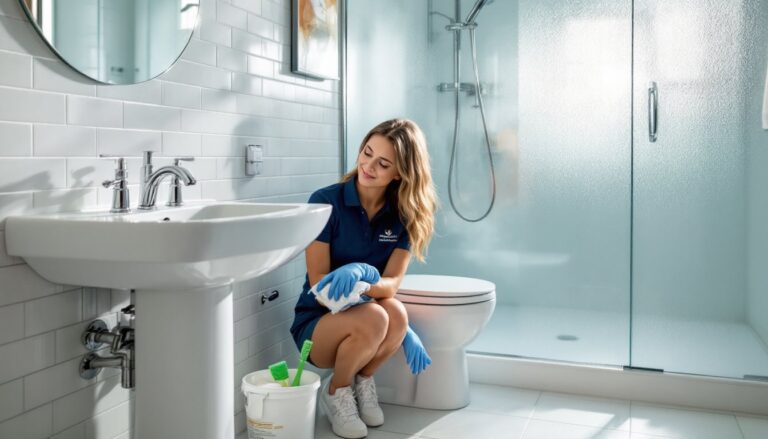
Bathroom Deep Cleaning Phrases
Bathrooms demand sanitization and mold prevention. The vocabulary here centers on fixtures and moisture-prone areas:
• Baño/cuarto de baño – bathroom
• Inodoro/taza del baño – toilet
• Ducha – shower
• Bañera/tina – bathtub
• Lavabo – sink
• Espejo – mirror
• Azulejos – tiles
• Cortina de baño – shower curtain
• Rejilla de ventilación – vent grill
• Mampara – shower door/screen
Critical bathroom tasks:
• Desinfectar el inodoro – disinfect the toilet
• Quitar el moho – remove mold
• Limpiar las juntas con cepillo – scrub grout with a brush
• Pulir los grifos – polish the faucets
• Limpiar la mampara de la ducha – clean the shower door
• Destapar el desagüe – unclog the drain
Bathroom work requires cepillo de fregar (scrub brush), desinfectante (disinfectant), and often a removedor de moho (mold remover). Safety note: Never mix cleaning products, nunca mezcle productos de limpieza, especially bleach and ammonia-based cleaners.
Common Cleaning Supplies and Tools in Spanish
Having the right tools makes deep cleaning possible. Here’s what fills a proper cleaning caddy:
Cleaning Tools:
• Trapo/paño – rag/cloth
• Esponja – sponge
• Cepillo – brush
• Escoba – broom
• Trapeador/mopa – mop
• Aspiradora – vacuum cleaner
• Balde/cubeta – bucket
• Guantes de goma – rubber gloves
• Recogedor – dustpan
• Cepillo de dientes viejo – old toothbrush (for tight spots)
Cleaning Products:
• Detergente – detergent
• Desinfectante – disinfectant
• Limpiador multiusos – all-purpose cleaner
• Desengrasante – degreaser
• Blanqueador/cloro – bleach
• Limpiador de vidrios – glass cleaner
• Removedor de manchas – stain remover
• Vinagre blanco – white vinegar
• Bicarbonato de sodio – baking soda
• Jabón líquido – liquid soap
Many professional cleaners rely on vinagre blanco and bicarbonato de sodio as safer alternatives to harsh chemicals. Resources like Good Housekeeping test these products extensively, confirming their effectiveness for deep cleaning when used correctly.
Personal protective equipment matters in deep cleaning. Always use guantes (gloves) when handling strong cleaners, mascarilla (mask) when working with mold or dust, and ensure buena ventilación (good ventilation) when using chemical products.
Helpful Spanish Phrases for Communicating Cleaning Instructions
Clear instructions prevent do-overs. These phrases turn cleaning expectations into actionable tasks:
Giving Instructions:
• Por favor, limpie… – Please clean…
• Necesito que desinfecte… – I need you to disinfect…
• ¿Puede fregar…? – Can you scrub…?
• Asegúrese de limpiar detrás de… – Make sure to clean behind…
• Use este producto para… – Use this product for…
• Tenga cuidado con… – Be careful with…
• No olvide… – Don’t forget…
Describing Results:
• Debe quedar bien limpio – It should be very clean
• Sin manchas – No stains
• Bien desinfectado – Well disinfected
• Libre de polvo – Dust-free
• Brillante – Shiny/polished
Time and Frequency:
• Una vez a la semana – Once a week
• Cada dos semanas – Every two weeks
• Mensualmente – Monthly
• Hoy necesito que… – Today I need you to…
• Esto es urgente – This is urgent
Safety Warnings:
• Use guantes – Wear gloves
• Abra las ventanas – Open the windows
• No mezcle estos productos – Don’t mix these products
• Mantenga alejado de los niños – Keep away from children
Practical tip: Write down specific instructions room by room. A simple checklist with Spanish terms prevents miscommunication and creates accountability. Organizational strategies from Real Simple recommend maintaining a standard cleaning checklist translated into both languages for consistency.
For homeowners managing their own deep cleaning schedules, these phrases also work for coordinating with family members or housemates. The vocabulary transfers across situations, whether hiring help or dividing chores.
Deep cleaning requires precision, not guesswork. With this vocabulary, anyone can communicate exactly what needs scrubbing, disinfecting, or polishing. The difference between limpiar and desinfectar isn’t semantic, it’s the gap between surface-level and truly sanitary. These terms equip homeowners to set clear standards, protect surfaces properly, and ensure every corner gets the attention it deserves.