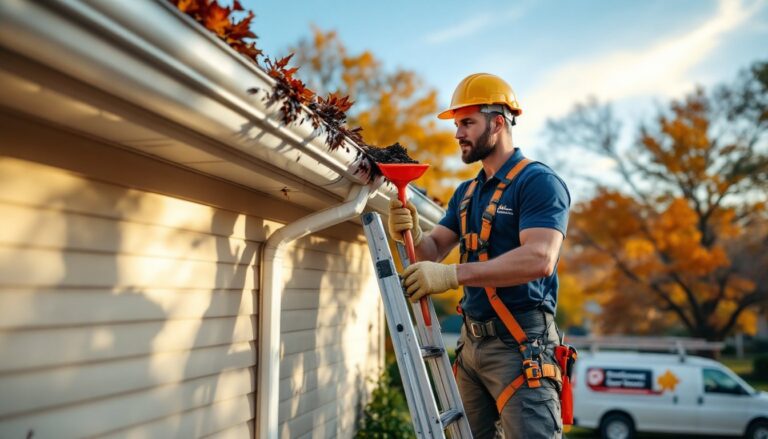
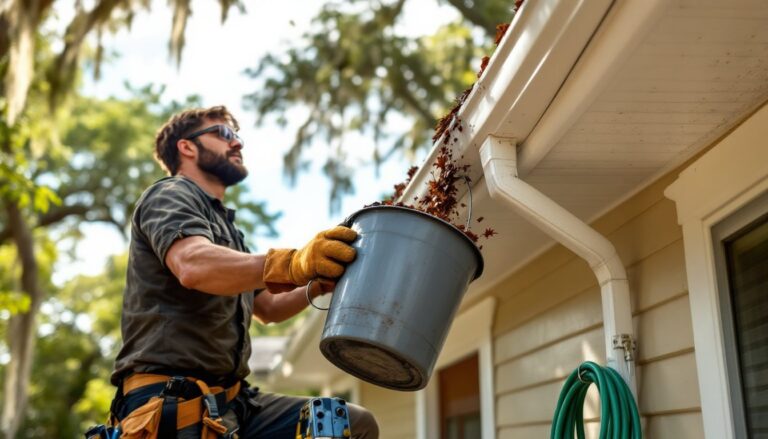
Clogged gutters can lead to foundation damage, basement flooding, and rotted fascia, repairs that cost thousands. But hiring a crew to clean them 2-3 times a year adds up fast. The good news? With the right DIY gutter cleaning tools, most homeowners can tackle the job safely and efficiently from the ground or a stable ladder. Whether your home has standard K-style gutters or half-round profiles, understanding which tools work best for your setup saves time, money, and prevents water damage before it starts.
Table of Contents
ToggleKey Takeaways
- DIY gutter cleaning tools cost $0–50 and save $100–300 per professional visit, paying for themselves after just 2–3 cleanings while preventing costly foundation and water damage.
- A plastic gutter scoop paired with an extension pole or wet/dry vacuum kit lets most homeowners clean gutters safely from the ground, eliminating dangerous ladder work for single-story homes.
- Regular gutter cleaning twice yearly protects your foundation from hydrostatic pressure, prevents fascia rot, and avoids insurance claim denials due to water damage from neglect.
- Match your DIY gutter cleaning tools to your gutter type—K-style gutters use curved scoops, half-round gutters need rounded edges, and box gutters require dustpan-style scoops.
- Prioritize safety equipment like ladder stabilizers, non-slip gloves, and proper footwear: ladder falls are a leading cause of ER visits, making fall prevention essential for DIY gutter work.
Why Regular Gutter Cleaning Matters for Your Home
Gutters move thousands of gallons of water away from your foundation every year. When leaves, shingle grit, or nesting debris blocks the flow, water overflows onto siding, seeps into crawl spaces, or pools against the foundation. Over time, this causes:
- Foundation cracks and settling from hydrostatic pressure
- Fascia and soffit rot where overflow soaks wood trim
- Basement or crawl space flooding during heavy rain
- Ice dams in winter when trapped water freezes and backs up under shingles
Most regions require cleaning at least twice a year, spring and fall. Homes near pine trees or with overhanging branches may need quarterly cleanings. Skipping maintenance doesn’t just risk leaks: it can void homeowner’s insurance claims related to water damage if neglect is evident.
DIY cleaning costs $0-50 in tools versus $100-300 per professional visit. For a typical single-story home, the job takes 1-3 hours depending on gutter length and debris load.
Essential DIY Gutter Cleaning Tools Every Homeowner Should Own
Gutter Scoops and Hand Tools
A plastic gutter scoop ($5-12) is the workhorse of gutter cleaning. Look for one with a tapered front edge that matches the bottom profile of your gutters, usually a curved shape for K-style gutters. Metal scoops work but can scratch aluminum gutters or dent seams.
Garden trowels or small hand rakes are budget alternatives, though they’re less efficient. For stubborn clogs, a gutter cleaning brush with stiff nylon bristles scrubs away packed pine needles or decomposed leaf muck without damaging gutter coatings.
Keep a 5-gallon bucket with a hook or lanyard to hang from your ladder. Tossing debris off the roof creates cleanup work (and angry neighbors). A bucket caddy lets you scoop, dump, and move without constant trips up and down.
Extension Poles and Attachments
For single-story homes or cleaning from the ground, telescoping extension poles (8-24 feet, $20-60) paired with specialized attachments eliminate ladder work. Common attachments include:
- Gutter cleaning wands with curved tips that hook into the gutter channel
- Rotating brush heads that spin to dislodge debris
- High-pressure nozzle extensions for garden hoses (more on this below)
These tools connect via standard threaded fittings or quick-release clamps. Extension poles reduce fall risk but require good visibility, you can’t see into the gutter from ground level, so you may miss clogs near downspouts.
Wet/dry shop vacuums with gutter cleaning kits ($30-80 for the attachment kit) use suction to pull out leaves and sludge. Look for models with a 2.5-inch diameter hose and a curved plastic nozzle. This method works well for dry debris but struggles with matted, waterlogged material. Pair it with a gutter flusher attachment for your garden hose to rinse afterward, which helps identify remaining downspout blockages that suction alone might miss.
Budget-Friendly Tools You Can Make at Home
A length of 1-inch PVC pipe (10-12 feet, $8-15) becomes a simple gutter flusher with a few fittings. Cut the pipe to reach your gutters comfortably, then attach a 90-degree elbow at the top end. Add a garden hose adapter to the bottom. The elbow directs water flow horizontally into the gutter, flushing debris toward the downspout. For better scraping action, some DIYers create a U-shaped end by heating and bending the PVC or adding a second elbow, instructions for building this homemade PVC gutter cleaner show how to customize the angle for different gutter profiles.
Plastic bottle scoops work in a pinch: cut a clean gallon milk jug at a 45-degree angle, leaving the handle intact. The curved shape mirrors a gutter scoop. It’s flimsy but free.
For second-story gutters where extension poles fall short, a homemade gutter vacuum attachment can be fashioned from 2-inch PVC pipe, a 45-degree elbow, and duct tape to connect it to a shop vac hose. Sand the edges smooth to avoid scratching gutters. It won’t match commercial kits in durability, but it extends reach for under $10 in materials.
Safety Equipment for DIY Gutter Cleaning
Ladder falls send over 160,000 people to the ER annually, and gutter cleaning is a leading cause. Invest in the right safety gear:
- Ladder stabilizer or standoff bracket ($30-50): Keeps the ladder away from the gutter edge, preventing dents and improving stability. It also provides clearance to work.
- Non-slip work gloves with rubberized palms: Protects hands from sharp metal edges, wasp nests, and decomposing organic matter that harbors bacteria.
- Safety glasses or goggles: Debris, gutter spikes, and hidden nails can fall into your face when scooping.
- Rubber-soled boots with ankle support: Essential on a ladder: avoid sandals or smooth-soled shoes.
Use a Type I or Type IA fiberglass extension ladder rated for at least 250 lbs. Aluminum conducts electricity, never use one near overhead power lines. Set the ladder at a 4:1 ratio (base 1 foot out for every 4 feet of height). Have a second person steady the base if you’re working above 12 feet.
For steep roofs or three-story homes, hire a professional. Most home maintenance experts recommend against roof access unless you have proper fall arrest equipment and experience. It’s not worth the risk for a $150 service call.
How to Choose the Right Tools for Your Gutter Type
K-style gutters (the most common residential profile) have a flat back and decorative front that mimics crown molding. Use curved-tip scoops and standard gutter brushes. Most extension pole attachments are designed for K-style channels, which are typically 5 or 6 inches wide.
Half-round gutters are semicircular and found on older or historic homes. Their smooth curve requires scoops with a rounded edge: flat trowels leave debris in the bottom curve. Gutter cleaning brushes work well here, but avoid stiff wire brushes on copper or painted steel, they’ll scratch the finish.
Box gutters (built into the roofline, common on older homes) are wider and deeper. Standard scoops are too small: use a dustpan-style scoop or a small hand rake. Box gutters often require more frequent cleaning because they hold more debris and are prone to standing water.
Gutter guards or screens change the tool equation. Micro-mesh guards prevent most debris but still need annual rinsing. Brush-style guards (bottle-brush inserts) trap debris on top, use a leaf blower or stiff broom instead of scoops. Perforated aluminum covers can be lifted for traditional cleaning.
For homes with two-story or higher gutters, prioritize ground-level tools: telescoping poles, wet/dry vac kits, or hose extensions. If ladder work is unavoidable, use a ladder leveler on uneven ground and always work with a spotter.
Match your tool investment to your gutter length and tree coverage. A small ranch with minimal debris can get by with a $10 scoop and garden hose. A two-story colonial surrounded by oaks justifies a $60 wet/dry vac kit and a quality stabilizer. The ROI comes after 2-3 cleanings versus hiring out.