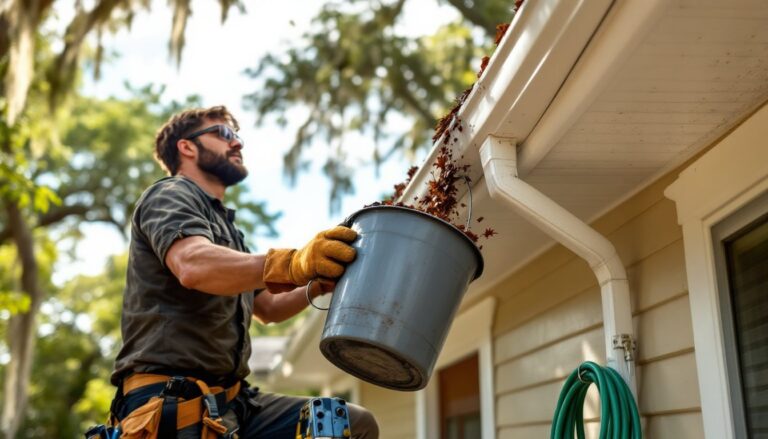
Milwaukee’s freeze-thaw cycles, heavy spring rains, and cottonwood tree debris create a triple threat for homeowners with clogged gutters. When downspouts back up during a March storm, water doesn’t just pool, it finds cracks in foundations, rots fascia boards, and turns basements into indoor swimming pools. Most Milwaukee homes need gutter cleaning at least twice yearly, but properties near Lake Michigan or under mature trees often require three or four cleanings. This guide walks through the when, why, and how of keeping gutters clear in southeastern Wisconsin’s demanding climate.
Table of Contents
ToggleKey Takeaways
- Milwaukee’s freeze-thaw cycles and cottonwood debris require homeowners to schedule gutter cleaning at least twice yearly, with properties near Lake Michigan or under mature trees needing three to four cleanings annually.
- Clogged gutters can cause foundation damage costing $4,500–$12,000, wood rot from ice dams, and rotted fascia repairs exceeding $1,200, making regular maintenance far more cost-effective than emergency repairs.
- Schedule gutter cleaning in late October to early November before the first hard freeze and again in late April to early May to clear spring debris and prepare for heavy May rains.
- DIY gutter cleaning requires proper safety equipment including a stabilized ladder, work gloves, and eye protection, with the critical rule to never work from a roof edge and always use three points of contact.
- Professional gutter cleaning in Milwaukee costs $120–$400 depending on home size, and hiring contractors who provide inspection, photo documentation, and proof of liability insurance ensures thorough service.
- Combine gutter cleaning with preventive measures like micro-mesh guards, trimmed overhanging branches, and downspout extensions that carry water at least six feet from the foundation to minimize future clogs.
Why Gutter Cleaning Matters for Milwaukee Homeowners
Gutters move thousands of gallons off roofs every year. A single inch of rain on a 1,500-square-foot roof generates roughly 935 gallons of runoff. When leaves, asphalt grit, and cottonwood fluff block downspouts, that water overflows onto siding, windowsills, and the ground directly against the foundation.
Milwaukee’s clay-heavy soil compounds the problem. Water pooling near foundations doesn’t drain quickly, it saturates the ground and creates hydrostatic pressure against basement walls. Over a few seasons, that pressure opens hairline cracks into gaps wide enough to let groundwater seep through. Foundation repairs average $4,500 to $12,000 depending on severity, far more than routine gutter maintenance.
Ice dams form when clogged gutters trap snowmelt. As temperatures drop overnight, trapped water freezes and expands, pushing under shingles and into roof decking. Wood rot follows, and once decking is compromised, a full tear-off and replacement becomes necessary, not just a shingle patch.
Rotted fascia boards are another expensive consequence. The fascia supports gutter hangers, and when wood stays wet from overflow, it softens and pulls away. Replacing fascia requires removing gutters entirely, cutting out damaged sections, sistering new lumber, priming, painting, and reinstalling hardware. That’s a $1,200+ repair that clean gutters prevent.
When to Clean Your Gutters in Milwaukee’s Climate
Milwaukee’s climate demands a spring and fall minimum cleaning schedule, with adjustments for tree coverage and weather patterns.
Late October through early November is the first critical window. Oaks, maples, and elms drop leaves through mid-November in southeastern Wisconsin. Wait until most leaves have fallen but before the first hard freeze makes ladder work dangerous. Cleaning too early means repeating the job three weeks later.
Late April or early May handles spring debris. Cottonwood trees release cottony seeds that mat into felt-like clogs, and spring storms knock down twigs and asphalt granules from aging shingles. Early spring cleaning also clears winter grit and ice-dam residue before heavy May rains arrive.
Homes with overhanging trees need additional cleanings. A property with mature silver maples or cottonwoods directly over the roofline should add a mid-summer check in July and a late-winter inspection in February or March. Homes near Lake Michigan face higher wind exposure, which deposits more airborne debris year-round.
After severe storms, inspect gutters within 48 hours. High winds drop branches, and hail dislodges shingle granules. Both create sudden blockages that turn the next rainstorm into an overflow event.
DIY Gutter Cleaning: Tools and Step-by-Step Instructions
Cleaning gutters yourself saves $150 to $300 per service call, but requires the right setup and attention to safety.
Materials & Tools:
• Extension ladder (fiberglass or aluminum, rated for your weight plus 50 lbs)
• Ladder stabilizer or standoff brackets (keeps ladder off gutters)
• Work gloves (leather or nitrile-coated for grip)
• Bucket with S-hook (hangs on ladder rung)
• Gutter scoop or plastic hand trowel
• Garden hose with spray nozzle
• Safety glasses (debris falls when scooping)
• 5-gallon bucket on the ground for dumping collected material
Step-by-Step Process:
-
Set the ladder at a 75-degree angle. Position the base one foot away from the house for every four feet of ladder height. On soft ground, use plywood under ladder feet to prevent sinking.
-
Start at a downspout. Work away from the downspout opening so debris doesn’t get pushed deeper into the drop. Scoop wet leaves and sludge into the bucket.
-
Check downspouts for clogs. Drop a small rock down the opening. If it doesn’t exit at the bottom elbow, the downspout is blocked. Use a plumber’s snake or disassemble the elbow joint to clear it.
-
Flush with a hose. Once debris is removed, run water from the highest point toward each downspout. Water should flow freely without pooling. Pooling indicates a pitch problem or hidden clog.
-
Inspect hangers and seams. Look for loose ferrules (the long spikes holding gutters to fascia) and separated seams. Tighten or replace hardware while you’re up there.
-
Dump debris into yard waste bags, not onto flower beds. Wet gutter sludge smothers plants.
A wet/dry shop vac with a gutter attachment works for dry debris but struggles with spring’s matted cottonwood buildup. Hand scooping is more reliable in Milwaukee’s wet spring conditions.
For two-story homes, consider a telescoping gutter wand attachment for your hose. It won’t replace hands-on cleaning, but it helps flush light debris between full cleanings without ladder work.
Essential Safety Tips for Cleaning Gutters
Never work from a roof edge. Leaning over a gutter from the roof is unstable and puts strain on roofing materials. Always use a ladder with a standoff.
Check ladder condition before every use. Cracked rails, bent rungs, or worn feet make falls likely. Fiberglass ladders don’t conduct electricity if you contact overhead wires, making them safer than aluminum near power lines.
Avoid cleaning in high wind or rain. Wet ladder rungs are slippery, and wind gusts can shift an extension ladder. Wait for calm, dry conditions.
Use three points of contact when climbing or descending. Two hands and one foot, or two feet and one hand should always touch the ladder.
Don’t overreach. Move the ladder frequently rather than leaning sideways. Your belt buckle should stay between the ladder rails.
Wear eye protection at all times. Dried leaves, wasps, and grit fall directly into your face when scooping overhead.
If your home is three stories or higher, or if you have physical limitations that make ladder work risky, hire a professional. No amount of saved money justifies a fall injury.
Signs Your Milwaukee Gutters Need Immediate Attention
Between scheduled cleanings, watch for these warning signs that gutters need service now, not next month.
Water spilling over gutter edges during rain means a blockage is forcing overflow. Even a partial clog in the downspout creates a dam effect that backs water up the entire run.
Sagging sections indicate either clogged gutters holding excess weight (wet debris weighs 4-6 lbs per linear foot) or failed hangers. A six-inch K-style gutter should have hangers every 24 inches: wider spacing lets gutters sag between supports.
Peeling paint or rust spots on gutters signal standing water that isn’t draining. Aluminum gutters don’t rust, but steel hangers and fasteners do. Rust stains on siding below the gutter line also indicate chronic overflow.
Foundation cracks or basement moisture that appear after heavy rain point to failed drainage. If gutters can’t move water at least six feet away from the foundation via downspout extensions, the water simply runs back toward the basement.
Plant growth in gutters, actual seedlings sprouting from accumulated soil, means debris has been sitting long enough to compost. That level of buildup typically takes 18+ months and represents a complete drainage failure.
Gutters pulling away from fascia happens when rotted wood can no longer hold fasteners, or when the weight of ice and debris exceeds the hanger’s load capacity. This requires immediate attention before the entire gutter section falls.
Hiring Professional Gutter Cleaning Services in Milwaukee
Professional gutter cleaning in Milwaukee typically costs $120 to $275 for a single-story home and $175 to $400 for two stories, depending on linear footage and access difficulty.
When vetting contractors, ask specific questions:
• Are you insured for both liability and workers’ compensation? A fall from your roof shouldn’t become your financial problem. Request proof of current coverage.
• Do you inspect while you clean? Good contractors note loose hangers, separated seams, and pitch problems. A cleaning without an inspection misses half the value.
• What’s included in the service? Baseline service should include debris removal, downspout flushing, and haul-away. Some add gutter brightening (exterior cleaning) or minor repairs for an additional fee.
• Do you provide photo documentation? Reputable services take before/after photos and document any damage or concerns found during the work.
Milwaukee homeowners researching professional gutter services find that established local companies often provide more consistent results than national franchises with high turnover.
Avoid companies that quote without seeing the property or offer prices far below market rate. Gutter cleaning requires ladder work, liability insurance, and disposal costs, a lowball price usually means corners get cut on safety or thoroughness.
For cost comparison across home improvement services, resources like HomeAdvisor provide regional pricing benchmarks that help homeowners evaluate whether quotes are reasonable for Milwaukee’s market.
Preventing Future Gutter Problems: Maintenance Tips
Between cleanings, a few preventive steps reduce clog frequency and extend gutter life.
Gutter guards reduce debris accumulation but don’t eliminate cleaning. Mesh screens, foam inserts, and reverse-curve systems all have trade-offs. Micro-mesh guards work best in Milwaukee’s mixed-debris environment (leaves, cottonwood, pine needles), but expect to pay $8 to $12 per linear foot installed. Cheaper snap-on screens clog with asphalt grit and need annual removal for cleaning underneath.
Trim overhanging branches back at least six feet from the roofline. This reduces leaf drop directly into gutters and prevents squirrels from accessing the roof. Hire a certified arborist for branches over 10 feet high or near power lines.
Check gutter pitch annually. Gutters should slope 1/4 inch per 10 feet toward downspouts. Use a four-foot level and a tape measure. If water pools in sections, adjust hanger height to restore proper pitch.
Extend downspouts away from the foundation. Flexible corrugated extensions should carry water at least six feet out. Solid PVC extensions or underground drains that daylight into the yard work better long-term but require more installation effort.
Inspect after storms. A quick visual check from the ground after high winds or hail takes two minutes and catches problems before they escalate. Look for sagging, separated joints, or visible debris buildup.
For homeowners planning multiple exterior projects, platforms like ImproveNet offer bundled cost estimates that help prioritize gutter work alongside siding, roofing, or landscaping upgrades.
Repaint or reseal gutters every 5-7 years. Aluminum gutters’ factory finish degrades under UV exposure. A coat of exterior acrylic paint after cleaning restores weather resistance and prevents oxidation that weakens seams.