Commercial buildings face unique gutter maintenance challenges that go beyond residential upkeep. A backed-up gutter system on a 10,000-square-foot retail center or multi-story office building can dump thousands of gallons of water directly against your foundation, damage expensive storefronts, and turn parking lots into liability hazards. Unlike home gutters that handle runoff from maybe 2,000 square feet of roof, commercial systems manage water from massive surface areas, often with flat or low-slope roofs that complicate drainage. Property managers and building owners need a systematic approach to gutter cleaning that accounts for scale, safety regulations, and business continuity. This guide walks through the maintenance schedules, decision points, and procedures that keep commercial gutter systems functioning without interrupting operations or creating safety risks.
Table of Contents
ToggleKey Takeaways
- Commercial gutter cleaning prevents thousands of dollars in water damage to foundations, inventory, and HVAC equipment by managing runoff from massive roof surface areas that residential systems cannot handle.
- Most commercial properties require gutter cleaning twice yearly—spring and fall—with increased frequency for heavy tree coverage, flat roofs, or buildings near restaurants and rooftop operations.
- Commercial gutter cleaning demands OSHA-compliant fall protection for multi-story buildings, making professional contractors a safer and more cost-effective choice than in-house crews for properties over one story.
- Always verify current insurance certificates (minimum $1 million general liability) and documented safety protocols before hiring a commercial gutter cleaning service to protect your business from liability.
- Maintenance logs with dates, crew information, and condition photos document due diligence for insurance claims and help identify problem areas requiring system repairs or modifications.
- Downspouts should extend at least 6 feet from foundations, interior roof drains need monthly inspections during fall and spring, and sagging gutters indicate undersized hangers that require replacement every 24 inches maximum.
Why Commercial Gutter Cleaning Matters for Your Business Property
Commercial gutter systems protect significant investments. A clogged downspout on a 20,000-square-foot building can overflow 1,200 gallons per hour during moderate rainfall, channeling that water into places it shouldn’t go, HVAC equipment on rooftops, masonry walls, electrical service entries, and foundations.
Water infiltration costs businesses far more than residential properties. A single leak through a parapet wall can damage inventory, ruin electronics, force temporary closures, and trigger mold remediation that runs into five figures. Insurance claims for water damage often include business interruption coverage, but premiums increase after claims and some policies require documented maintenance schedules.
Structural issues escalate quickly. Overflowing gutters saturate soil around foundations, increasing hydrostatic pressure that can crack basement walls or compromise slab-on-grade construction. On flat commercial roofs with interior drains, debris blockages create ponding that degrades membrane roofing systems, which typically carry 10- to 20-year warranties that exclude damage from poor maintenance.
Safety and liability matter too. Ice dams forming from clogged gutters create slip hazards in parking lots and sidewalks. Falling ice or loose gutter sections can injure employees, customers, or pedestrians. Most commercial general liability policies require property owners to maintain premises in safe condition, neglected gutters work against that obligation.
How Often Should Commercial Gutters Be Cleaned?
The baseline recommendation for most commercial properties is twice per year, once in late spring after tree pollen and seed drop, and again in late fall after leaves finish dropping. That schedule assumes moderate tree coverage and standard asphalt shingle or metal roofing.
Adjust frequency based on specific conditions:
- Heavy tree coverage (especially oak, maple, or pine near the roofline): Quarterly cleaning prevents debris accumulation that clogs downspouts between scheduled maintenance.
- Flat or low-slope roofs with interior drains: Monthly inspection during fall and spring, with cleaning as needed. Interior drains clog faster than perimeter gutters because they collect debris from the entire roof surface.
- Coastal or high-wind areas: Add an inspection after major storms. Wind-driven debris can overwhelm gutter capacity in a single weather event.
- Buildings with restaurant operations or rooftop HVAC: Grease, condensation, and particulates from exhaust systems can combine with organic debris to create stubborn clogs. Plan for quarterly service.
- Retail or hospitality properties: Clean before high-traffic seasons. A gutter failure during peak business periods costs more than preventive maintenance.
Document every cleaning with date, crew, and condition notes. Maintenance logs prove due diligence if insurance or liability questions arise, and they help identify problem areas that need more frequent attention or system modifications.
DIY vs. Professional Commercial Gutter Cleaning: What You Need to Know
Commercial gutter cleaning presents risks that don’t exist in residential work. Buildings over one story typically require OSHA-compliant fall protection, which means guardrails, safety harnesses, or aerial lifts, not just extension ladders. OSHA’s General Duty Clause and fall protection standards (29 CFR 1926.501) apply to any commercial maintenance work, including in-house crews.
Liability insurance becomes critical. If a maintenance employee or contractor falls from your building, workers’ compensation claims can run to hundreds of thousands. Hiring a professional service shifts that liability to an insured contractor. Always verify general liability insurance (minimum $1 million) and workers’ compensation coverage before signing contracts. Many property managers using contractor matching platforms require certificate of insurance before any work begins.
In-house maintenance makes sense for single-story buildings with straightforward gutter systems and trained staff. A small retail strip or warehouse with accessible rooflines can be handled by property maintenance teams if they have proper equipment and safety training.
Outsource for multi-story buildings, complex roof geometries, or properties without dedicated maintenance staff. The equipment cost alone, aerial lifts, harnesses, anchors, justifies hiring specialists who already own that gear and know how to use it safely.
Essential Tools and Equipment for Commercial Gutter Maintenance
If you’re handling gutter cleaning in-house, don’t improvise on equipment. Commercial work requires:
- Fall protection systems: OSHA-compliant harnesses, lanyards, and anchor points rated for the worker’s weight plus tools (typically 5,000-pound minimum anchor strength). Guardrails work better than personal fall arrest systems when feasible.
- Ladders or aerial lifts: Extension ladders must extend 3 feet above the roofline and be tied off. For buildings over 15 feet, aerial lifts (boom lifts or scissor lifts) provide safer access. Rental costs run $200–$500 per day depending on height.
- High-capacity wet/dry vacuums: Commercial gutter vacuums with extended wands (up to 40 feet) allow ground-level cleaning on some single-story buildings. They work best for dry debris: wet sludge clogs hoses.
- Gutter scoops and flushing tools: Plastic scoops prevent scratching aluminum or copper gutters. A garden hose with trigger nozzle flushes downspouts after debris removal.
- PPE (personal protective equipment): Heavy-duty gloves (leather or nitrile-coated), safety glasses, and non-slip boots are non-negotiable. Debris often includes sharp metal flashing, broken shingles, and rodent droppings that carry pathogens.
Step-by-Step Guide to Cleaning Commercial Gutters Safely
Before starting, check the weather forecast. Avoid working on roofs during wind over 20 mph or when rain is expected within four hours. Wet surfaces increase fall risk, and storms can arrive faster than you can pack up equipment.
-
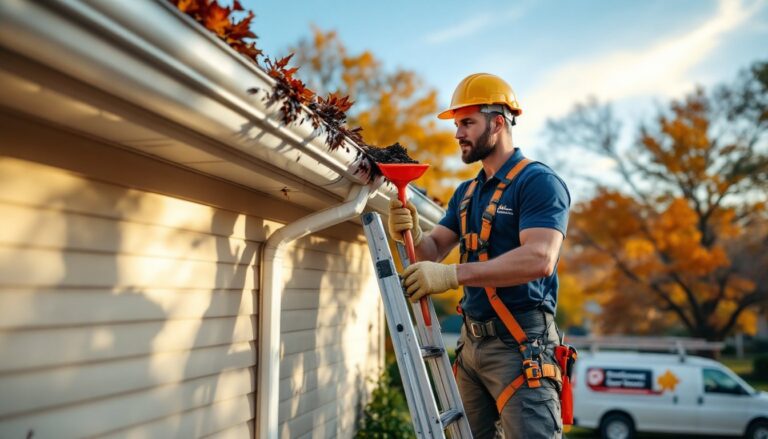
Set up fall protection and access equipment. Install guardrails or anchor points before anyone steps onto the roof. Position ladders or aerial lifts on stable, level ground. If using ladders, have a spotter foot the ladder and maintain three-point contact while climbing.
-
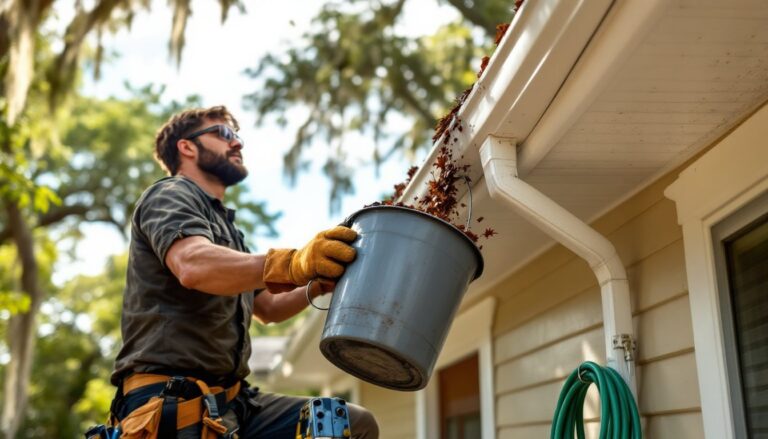
Remove large debris by hand or scoop. Start at downspouts and work away from them, you’ll avoid pushing debris into the drain opening. Collect leaves, twigs, and sediment in a bucket or drop them onto tarps below (not onto landscaping or parking areas).
-
Flush gutters and test downspout flow. Use a garden hose to wash remaining sludge toward downspouts. If water backs up, the downspout is clogged. Snake it with a plumber’s auger or disassemble the elbow at the top of the downspout to clear blockages.
-
Inspect while you’re up there. Look for loose hangers, sagging sections (indicates hanger failure or ice damage), rust spots on steel gutters, or separated seams. Check that gutters slope toward downspouts at ¼ inch per 10 feet. Standing water means the pitch is wrong.
-
Check roof drains and scuppers on flat roofs. Remove debris baskets or strainers and clean them separately. Flush drains with water to confirm they’re clear. Blocked interior drains can’t be cleared from the gutter, they require a plumber or roofing contractor.
-
Document and report findings. Take photos of damage, note sections needing repair, and log the cleaning date. If you’re a contractor, provide a written report to the property manager. If you’re in-house, keep records for insurance and budgeting.
Never work alone on commercial roofs. Falls, sudden illness, or equipment failure can trap a solo worker with no one to call for help.
Common Commercial Gutter Problems and How to Prevent Them
Sagging or detached gutters result from undersized hangers or hangers spaced too far apart. Commercial gutters should have hidden hangers or brackets every 24 inches maximum, closer in high-snow regions. Aluminum gutters loaded with wet debris can weigh over 10 pounds per linear foot, cheap spike-and-ferrule hangers can’t handle that.
Leaking seams and end caps happen on sectional gutter systems. Most commercial buildings use continuous (seamless) gutters to avoid this issue, but older properties may still have sectional aluminum or steel gutters joined with sealant. Re-seal joints with polyurethane or butyl caulk rated for metal-to-metal applications. Silicone doesn’t adhere well to painted metal.
Corrosion and rust affect galvanized steel and uncoated aluminum gutters. Steel gutters rust from the inside out, starting where standing water sits. Aluminum develops white oxidation that weakens thin-wall material. If rust has eaten through the metal, patch kits won’t last, replace the affected section. Property owners researching renovation cost guides will find gutter replacement prices vary widely based on material (aluminum, steel, copper) and building height.
Ice dams and freeze damage occur when heat escapes through the roof, melting snow that refreezes at the cold gutter edge. The ice expands, bending hangers and cracking seams. Prevention requires adequate attic insulation (R-38 to R-60 depending on climate zone) and roof ventilation to keep the roof deck cold. Heat cables installed in gutters are a temporary fix, not a solution.
Downspouts discharging too close to the building undermine foundations and flood basements. Extend downspouts at least 6 feet from the foundation with rigid extensions or buried drain lines tied into storm sewers or daylight terminations. Check local codes, some jurisdictions require downspouts to connect to municipal storm systems.
What to Look for When Hiring a Commercial Gutter Cleaning Service
Start with proof of insurance. Request certificates of insurance showing general liability and workers’ comp coverage, and verify they’re current by calling the insurance carrier directly. Fraudulent certificates exist, and you don’t want to discover coverage lapsed after an accident.
Ask about safety protocols. Legitimate commercial contractors have written safety plans that comply with OSHA standards. They should describe fall protection measures, equipment inspection schedules, and crew training. If a company can’t explain how they meet OSHA requirements, move on.
Get detailed proposals, not vague estimates. A professional bid specifies the number of cleanings per year, what’s included (gutter cleaning, downspout flushing, minor repairs), response time for emergency calls, and whether they provide condition reports with photos. Lump-sum “gutter cleaning” quotes hide assumptions that lead to disputes.
Check references and local reviews for commercial clients specifically. Residential gutter cleaning experience doesn’t translate directly to commercial work. Ask references about punctuality, quality, and how the company handled damage or complaints.
Compare pricing structures. Some contractors charge per linear foot of gutter ($0.75–$2.50 depending on building height and difficulty), others quote per building or per visit. Annual maintenance contracts usually cost less per cleaning than one-off service calls. Factor in your cleaning frequency, quarterly service makes a contract worthwhile.
Understand what’s not included. Most gutter cleaning doesn’t cover gutter repairs, gutter guard installation, or roof repairs. If the crew finds damage, expect a separate estimate. Clarify whether disposal fees for debris are included or extra.
Verify they’re licensed if your jurisdiction requires it. Some states and cities require contractor licenses for commercial work over certain dollar thresholds. Unlicensed contractors can’t pull permits for work that requires them, and their work may void warranties.