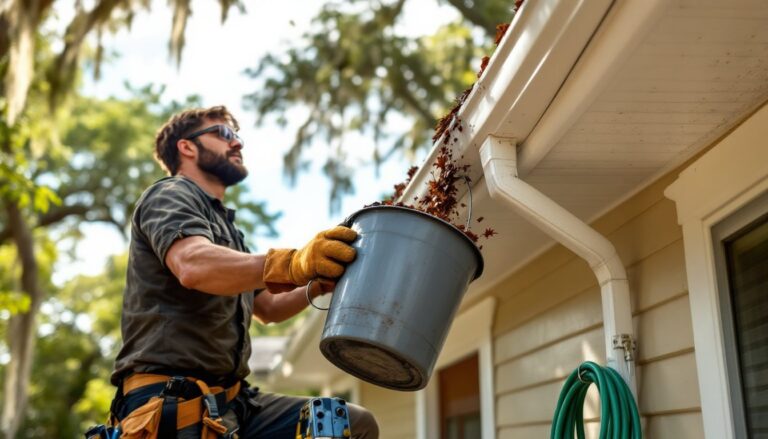
Huntington homeowners know that Long Island weather doesn’t mess around. Between heavy spring rains, autumn leaf drops, and occasional nor’easters, gutters take a beating year-round. When they fail, water damage can cost thousands, rotted fascia, basement flooding, and foundation erosion all start with clogged channels. This guide walks through everything needed to clean gutters safely and effectively, from timing cleanings around Huntington’s climate to spotting warning signs before damage strikes. Whether tackling the job solo or deciding when to call in help, understanding the process protects both the home and the budget.
Table of Contents
ToggleKey Takeaways
- Gutter cleaning in Huntington should happen at least twice yearly—late spring and late fall—to prevent water damage, foundation issues, and rot that can cost $3,000 to $15,000 to repair.
- Clogged gutters lead to foundation damage, fascia rot, basement flooding, and ice dams; the CDC reports ladder falls cause over 160,000 ER visits annually, making proper safety equipment and technique essential for DIY work.
- Use a Type 1A fiberglass ladder at a 75-degree angle with cut-resistant gloves, safety glasses, and a bucket system; this systematic process takes 2 to 4 hours for single-story Huntington homes.
- Watch for warning signs like water stains on siding, sagging sections, basement moisture, and visible rust between cleanings—these require immediate attention to prevent structural damage.
- Gutter guards and regular maintenance—including trimming overhanging branches and extending downspouts 4 to 6 feet—reduce cleaning frequency and extend gutter system life significantly.
Why Gutter Cleaning Is Essential for Huntington Homeowners
Huntington’s coastal location means humidity, salt air, and rapid vegetation growth, all factors that accelerate gutter deterioration. Gutters move water away from the foundation, typically designed to handle 1 inch of rain per hour over the roof’s square footage. When leaves, shingle grit, and organic debris block the flow, water overflows and pools against siding or seeps into crawl spaces.
Foundation damage ranks among the costliest consequences. Pooled water saturates soil, creating hydrostatic pressure against basement walls. Over freeze-thaw cycles common in New York winters, this pressure causes cracks and bowing. Repairing foundation issues often runs $3,000 to $15,000, depending on severity, far more than routine gutter maintenance.
Fascia and soffit rot follow close behind. These wooden boards behind gutters aren’t pressure-treated: constant moisture exposure lets wood decay set in within 18 months. Rotted fascia can’t support gutter weight, leading to sagging sections that worsen drainage problems. Replacing fascia boards requires removing gutters entirely, adding labor costs.
Ignored gutters also create ice dam conditions in winter. Trapped water freezes, expands, and forces its way under shingles, damaging roof decking. The 2021 International Residential Code (IRC) emphasizes proper drainage to prevent ice damming, though code enforcement varies by municipality in Suffolk County.
When to Clean Your Gutters in Huntington’s Climate
Most Huntington homes need gutter cleaning at least twice annually, late spring and late fall. These windows align with seasonal debris patterns and weather conditions.
Spring cleaning (late April through May) removes winter accumulation: pine needles, seed pods, and breakdown from fall leaves trapped under snow. Spring also brings heavy rainstorms: cleaning before peak rainfall ensures gutters handle volume. Check after any storm with winds over 35 mph, as these knock down branches and shingle granules.
Fall cleaning (late October through November) tackles the main leaf drop. Oaks, maples, and sycamores dominate Huntington’s tree canopy, shedding heavily from mid-October onward. Wait until most leaves have fallen to avoid repeat cleanings, but finish before Thanksgiving when temperatures drop and ice formation starts.
Homes near wooded areas or under tree canopies may need quarterly cleanings. Pine trees drop needles year-round, and their acidic resin clogs downspouts faster than deciduous leaves. If the property has Norway maples or willows, their helicopter seeds and catkins add another spring cleaning cycle.
Timing matters for safety too. Avoid cleaning during freezing temperatures, icy ladders and frozen debris create hazards. Similarly, skip cleanings during heavy winds or within 48 hours of rain when roofs stay slick.
DIY Gutter Cleaning: Tools and Safety Tips
Gutter cleaning carries real risk, the CDC reports that ladder falls cause over 160,000 ER visits annually. Proper equipment and technique prevent most accidents.
Ladder safety comes first. Use a Type 1A fiberglass extension ladder rated for 300 lbs minimum. Aluminum conducts electricity, dangerous near overhead power lines. Set the ladder at a 75-degree angle (the base should be 1 foot out for every 4 feet of height). Never lean beyond the ladder rails: move it frequently rather than overreaching. A ladder stabilizer adds standoff distance from gutters and prevents denting.
Wear cut-resistant gloves, decomposed leaves hide sharp metal edges and wasp nests. Safety glasses protect against debris fallout when scooping, and rubber-soled boots grip roof surfaces if accessing valleys. For homes over one story, a safety harness anchored to roof framing provides fall protection, though most DIYers at that height should consider professional services.
Essential Equipment for the Job
Materials needed:
- Extension ladder (fiberglass, Type 1A rating)
- Ladder stabilizer or standoff brackets
- 5-gallon bucket with tool hooks
- Gutter scoop or plastic trowel
- Garden hose with spray nozzle
- Safety glasses and cut-resistant gloves
- Rubber-soled boots
- Tarp for ground debris collection
Optional but helpful:
- Gutter cleaning wand (extends hose reach)
- Wet/dry shop vacuum with gutter attachment
- Plumber’s snake for downspout clogs
- Roof anchors and safety harness (two-story homes)
A gutter scoop costs $8 to $15 and outperforms makeshift tools. Its curved plastic design matches gutter profiles and won’t scratch protective coatings. Some homeowners swear by leaf blowers with gutter attachments, but these scatter debris onto roofs and landscaping, useful for dried material only.
Professional services become cost-effective for homes over 2,000 square feet or with steep roof pitches (7:12 or greater). Many contractor matching platforms provide cost estimates based on linear gutter footage, typically $100 to $250 for single-story homes in the Huntington area.
Step-by-Step Gutter Cleaning Process
Work systematically to avoid missed sections and repeated ladder moves. Start at a downspout and work away in both directions.
1. Remove large debris by hand. Scoop leaves, twigs, and accumulated sediment into the bucket. Don’t overfill, a heavy bucket destabilizes ladder position. Dump contents onto the tarp below for easier yard cleanup later.
2. Check downspout openings. Pack a tennis ball-sized wad of leaves around the opening and remove it to pull trapped debris up. If water doesn’t drain when poured, the downspout is clogged.
3. Flush gutters with a hose. Starting at the high end opposite a downspout, run water at moderate pressure. This reveals leaks at seams and verifies proper slope (gutters should pitch 1/4 inch per 10 feet toward downspouts). Standing water indicates sagging sections.
4. Clear downspout blockages. If water backs up, disconnect the downspout at the elbow and spray upward from the bottom. Stubborn clogs respond to a plumber’s snake or disassembled sections. Some renovation planning resources suggest installing downspout screens to prevent future clogs, though these require their own maintenance.
5. Inspect while cleaning. Look for rust spots on metal gutters, cracks in vinyl seams, and loose spike-and-ferrule hangers. Hidden hangers should sit every 24 inches: sagging often means missing fasteners. Note any fascia discoloration behind gutters, a sign of overflow damage.
6. Test drainage flow. After cleaning, run the hose for five minutes at each downspout. Water should exit forcefully at ground level. Weak flow suggests partial clogs or improper pitch.
This process takes 2 to 4 hours for a typical single-story Huntington home with 150 to 200 linear feet of gutters. Two-story homes double that time and significantly increase fall risk, when comparing local gutter professionals, many homeowners find the $150 to $300 cost reasonable versus injury potential.
Signs Your Gutters Need Immediate Attention
Between scheduled cleanings, certain red flags demand immediate action. Ignoring these warning signs turns minor issues into structural repairs.
Water stains or mildew on siding indicate overflow. Gutters are directing water against walls instead of away from the foundation. Check for clogs or sections pulling away from the fascia.
Sagging gutter sections mean fasteners have failed or the fascia behind them has rotted. Standard aluminum gutters weigh about 1 pound per linear foot: when full of wet debris, they exceed 10 pounds per foot. Compromised hangers can’t support that load.
Basement moisture or foundation cracks often trace back to poor gutter drainage. Water follows the path of least resistance: if gutters overflow near foundation walls, it seeps into cracks and through block joints.
Plant growth in gutters signals chronic standing water. Seedlings and moss thrive in the organic matter, and their roots damage gutter seams. Once plants establish, they accelerate corrosion in metal gutters.
Peeling exterior paint below the roofline results from constant water exposure. Overflowing gutters drench siding, breaking down paint adhesion and exposing wood to rot.
Visible rust or holes in metal gutters require patching or section replacement. Small rust spots spread quickly in Huntington’s humid climate. Patch kits work for pinholes, but rust through the bottom seam means replacement.
Any of these issues warrant inspection even outside the normal cleaning schedule. Structural problems don’t wait for convenient timing.
Preventing Future Gutter Problems
Prevention beats repair for gutter longevity. A few proactive measures reduce cleaning frequency and extend system life.
Gutter guards cut debris accumulation by 70% to 90%, though they don’t eliminate cleaning entirely. Mesh screens ($1 to $3 per linear foot) block leaves but require annual removal to clear shingle grit underneath. Reverse-curve systems ($4 to $8 per foot) use surface tension but struggle with heavy downpours. Foam inserts clog with fine particles and break down under UV exposure within three years.
No guard system works perfectly, but they extend time between cleanings from six months to 18 months for most Huntington properties. Installation requires removing existing hangers in many cases, factor labor into cost comparisons.
Trim overhanging branches to at least 6 feet of clearance. This reduces leaf volume and prevents rodents from using branches as gutter access routes. Squirrels chew through aluminum gutters to nest in soffits.
Inspect fasteners annually. Spike-and-ferrule hangers work loose over time as wood fascia degrades. Hidden hangers (screwed directly into fascia) provide stronger support and resist sagging. Budget $2 to $4 per hanger plus labor for upgrades.
Extend downspouts 4 to 6 feet from the foundation using solid extensions or buried drain lines. Splash blocks alone don’t move water far enough on sloped lots. For properties with poor drainage, a French drain system tied to downspouts prevents pooling.
Clean gutters before winter to prevent ice dams. Adding heat cable along the roof edge ($0.50 to $1 per foot) melts snow before it refreezes in gutters, though this treats symptoms rather than the underlying ventilation issues that cause most ice dams.
Proper attic insulation and ventilation, R-49 insulation with balanced soffit and ridge vents per IRC standards, keeps roof surfaces cold and prevents the snowmelt-refreeze cycle. That’s a bigger project but solves ice damming at the source.
Regular maintenance costs less than emergency repairs. Two annual cleanings at $125 each ($250 yearly) prevent the $3,000+ foundation repairs or $800 fascia replacements that result from neglect.