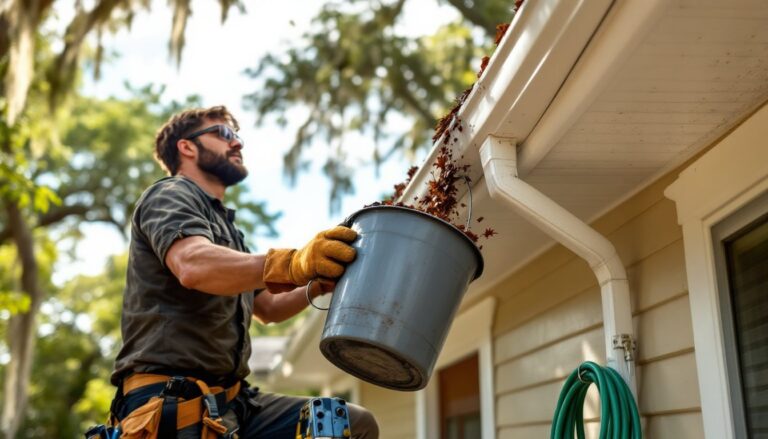
Vienna, VA homeowners know the drill: spring pollen, summer storms, and fall leaves all funnel straight into your gutters. When those channels clog, you’re looking at roof damage, foundation erosion, and basement flooding, expensive problems that start with a few inches of wet debris. Whether you’re climbing the ladder yourself or hiring out, understanding the local climate, timing, and best practices will save you both headaches and repair bills. This guide walks through everything Vienna residents need to keep gutters flowing and homes protected year-round.
Table of Contents
ToggleKey Takeaways
- Gutter cleaning in Vienna, VA is essential year-round due to heavy rainfall, dense tree canopy, and seasonal debris that can lead to foundation damage, roof leaks, and basement flooding.
- Schedule gutter cleaning in late April to early May after pollen season and in late October to mid-November after deciduous trees drop their leaves, with quarterly service recommended for homes under heavy tree cover.
- DIY gutter cleaning requires proper safety equipment, a stable ladder setup, and systematic debris removal away from downspouts—never use pressure washers as they damage seams and create deeper clogs.
- Professional gutter cleaning services in Vienna typically cost $120 to $250 for standard homes, with licensed and insured contractors providing better protection and maintenance contracts offering long-term savings.
- Common Vienna gutter problems like sagging gutters, seam leaks, and ice dams require regular inspection and proper pitch maintenance, while gutter guards reduce but don’t eliminate the need for periodic cleaning.
Why Gutter Cleaning Is Critical for Vienna Homeowners
Vienna sits in Northern Virginia’s humid subtropical zone, which means heavy seasonal rainfall, ice in winter, and dense tree canopy in most neighborhoods. That combination turns gutters into debris traps fast.
Clogged gutters can’t channel water away from your foundation. When overflow runs down siding or pools around basement walls, you risk:
- Foundation cracking and settlement from prolonged moisture exposure
- Fascia and soffit rot where trapped water soaks wood trim
- Ice dams in winter when snowmelt refreezes at clogged eaves, forcing water under shingles
- Mosquito breeding grounds in standing water during humid Virginia summers
- Basement flooding when downspouts can’t carry runoff away from the house
Most Vienna homes have mature oaks, maples, and pines. Even if your lot is clear, wind carries seeds, needles, and leaf litter from surrounding properties. A single storm can dump enough organic matter to block downspouts completely.
Ignoring gutter maintenance for a year or two doesn’t just mean a tougher cleanout, it often means replacing rotted fascia boards or repairing water-damaged interiors. Regular cleaning is cheaper than any of those fixes.
When to Schedule Gutter Cleaning in Vienna VA
Timing matters. Clean too early and you’ll be back up the ladder a month later: wait too long and you’re dealing with compacted sludge or ice.
Spring (late April to early May): After pollen season peaks and before summer storms. Gutters fill with oak tassels, maple seeds, and pine needles during this window. One thorough cleanout after trees finish flowering sets you up for the rainy season.
Fall (late October to mid-November): The big one. Wait until most deciduous trees drop their leaves, usually after the first hard freeze. If you clean in early October, you’ll still have half the canopy overhead. Mid-November is ideal for Vienna’s microclimate, but don’t push past Thanksgiving or you risk frozen debris.
After major storms: If a severe thunderstorm or nor’easter rolls through, inspect gutters even if you’re between regular cleanings. Heavy wind can dump branches, shingle grit, and clumps of wet leaves that block downspouts overnight.
How often you clean depends on tree cover. Homes under dense canopy may need quarterly service: properties with minimal overhang can stretch to twice a year. Walk your roofline every few months and check downspout flow during rain, if water spills over the edge, it’s time.
DIY Gutter Cleaning: Tools, Safety, and Step-by-Step Instructions
Cleaning your own gutters saves money, but only if you do it safely and thoroughly. Shortcuts lead to falls, incomplete jobs, or damage to the gutter system itself.
Essential Safety Gear and Equipment
Before you touch a ladder, gather the right gear:
- Extension ladder rated for your weight plus 20% margin (Type I or Type IA). Fiberglass ladders are safer around overhead power lines.
- Ladder stabilizer or standoff to keep the ladder off the gutters and prevent denting.
- Work gloves (leather or heavy rubber). Gutter edges are sharp, and decomposing leaf matter harbors bacteria and mold.
- Safety glasses to keep debris out of your eyes when scooping.
- Non-slip shoes with good ankle support.
- Gutter scoop or garden trowel for removing packed debris. Avoid metal scoops on aluminum gutters, they scratch and gouge.
- 5-gallon bucket with a hook or a tarp on the ground for waste.
- Garden hose with spray nozzle to flush downspouts and check flow.
NEVER use a pressure washer on gutters. The force can separate seams, bend hangers, or blow debris into downspouts, creating deeper clogs.
How to Clean Your Gutters Like a Pro
-
Set up the ladder safely. Place it on level ground, angled at a 4:1 ratio (for every 4 feet of height, base should be 1 foot from the wall). Use a spotter if possible, especially on uneven terrain.
-
Start near a downspout. Scoop out large debris by hand or with a gutter scoop, working away from the downspout opening. Drop waste into your bucket or onto a tarp below, don’t toss it on the roof: it’ll wash right back into the gutters.
-
Clear downspouts. Once the gutter run is clear, flush the downspout with a garden hose. If water backs up, the clog is inside. Use a plumber’s snake or disassemble the downspout elbow at the bottom to clear it. Some professionals recommend using resources like HomeAdvisor to find tools or contractors for tricky downspout clogs.
-
Check pitch and hangers. While you’re up there, look for sagging sections or loose hangers. Gutters should slope slightly toward downspouts, about 1/4 inch per 10 feet. If water pools, you may need to adjust hangers or add support.
-
Flush the entire system. Run a hose from the far end of each gutter run back toward the downspout. Watch for leaks at seams or corners. Mark problem spots for repair.
-
Inspect fascia and roof edge. Look for rot, peeling paint, or shingle damage while you’re at ladder height. Catching these early prevents bigger structural issues.
Safety note: Never lean sideways from a ladder to extend reach. Climb down and reposition. Most gutter-related falls happen when people overreach.
Hiring Professional Gutter Cleaning Services in Vienna VA
If your home is two-story, if you’re uncomfortable on ladders, or if you simply don’t have the time, hiring a pro makes sense. Rates in Vienna typically range from $120 to $250 for a standard single-family home, depending on linear footage, height, and gutter condition. Expect to pay more if downspouts are clogged or if the crew needs to remove compacted debris that’s been sitting for years.
What to look for in a contractor:
- Licensed and insured. Verify general liability and workers’ comp coverage. If someone falls off your roof, you don’t want to be liable.
- References and reviews. Check local platforms that feature top-rated gutter cleaning professionals for Vienna-specific feedback and verified work history.
- Detailed scope of work. The estimate should include gutter cleanout, downspout flushing, and debris disposal. Ask if they inspect for damage or just clean.
- No pressure sales. Reputable cleaners won’t push gutter guards or replacement systems on the first visit unless there’s obvious failure.
Many services offer annual maintenance contracts with spring and fall visits at a slight discount. If you have heavy tree cover, this can be a cost-effective way to stay on schedule.
Red flags: Quotes that are far below market rate (often a sign of no insurance), cash-only deals, or contractors who won’t provide a written estimate.
Common Gutter Problems in Vienna and How to Prevent Them
Vienna’s climate and landscape create a few recurring gutter issues. Spotting them early saves money.
Sagging or pulling away from the fascia: Usually caused by too few hangers or hangers that have rusted through. Standard spacing is every 24 inches: in areas with heavy snow or ice, go to 18 inches. Replace bent or corroded ferrules and spikes with hidden hanger brackets for better hold.
Leaks at seams and corners: Aluminum gutters expand and contract with temperature swings. Over time, caulk fails and seams separate. Clean the joint thoroughly, let it dry, and reseal with a gutter sealant (not general-purpose silicone, it won’t bond to wet metal). For persistent leaks, consider having a pro solder or rivet the seam.
Overflowing during heavy rain: If gutters are clean but water still spills over, you may have undersized gutters or too few downspouts for your roof area. Standard 5-inch K-style gutters handle most residential loads, but large or steep roofs may need 6-inch gutters or additional downspouts. Many homeowners explore project planning advice on ImproveNet for guidance on gutter capacity and drainage upgrades.
Ice dams in winter: These form when heat from the attic melts snow on the roof, which refreezes at the cold eave. The ice blocks meltwater, forcing it under shingles. Prevent ice dams with proper attic insulation and ventilation, not just by cleaning gutters, though clean gutters help.
Granule buildup from asphalt shingles: If your gutters are full of gritty black sediment, your shingles are shedding. Normal for the first year after a new roof, but heavy granule loss on older roofs signals shingle failure. Plan for replacement within a season or two.
Gutter guards: worth it? In Vienna’s leaf-heavy environment, guards can reduce cleanings but won’t eliminate them. Mesh screens keep out large debris but clog with pine needles and seed pods. Reverse-curve guards work better but cost significantly more. If you go this route, choose a product you can remove easily for periodic flushing, nothing is truly maintenance-free.