Side tables might seem like the unsung heroes of living rooms, but they’re more than just a place to rest your drink or that half-eaten bag of chips. These versatile pieces can elevate a room’s style while providing essential functionality. Imagine a cozy evening with friends, drinks in hand, and that perfect side table holding your snacks like a loyal butler.
Choosing the right side table can transform a bland space into a chic oasis. From sleek modern designs to rustic charm, the options are endless. So why settle for a boring corner when you can add a dash of personality? Let’s dive into the world of side tables and discover how these little gems can make a big impact in your living room.
Overview of Side Tables for Living Rooms
Side tables play a significant role in living room design. These functional pieces provide storage for remote controls or magazines and enhance the overall décor. Various styles exist, including contemporary, traditional, and industrial, allowing homeowners to select according to their personal taste.
Material choices include wood, metal, glass, and acrylic. Each material impacts both durability and aesthetic appeal. For example, wooden side tables offer warmth and texture, while glass tables create an airy feel in the space.
Size matters when selecting side tables. Consider the scale of existing furniture to maintain balance within the room. A larger sofa pairs well with a taller side table, while smaller seating arrangements benefit from lower tables.
Placement of side tables influences functionality. Positioning them near seating encourages easy access to beverages or snacks. Additionally, varying arrangements, such as grouping multiple tables, can add visual interest.
Functionality extends beyond simple storage. Many side tables include features like built-in charging stations or shelves, enhancing convenience. Multi-purpose designs cater to various needs, accommodating everything from casual lounging to entertaining.
In terms of color, side tables offer opportunities for adding pops of color. Bright hues can serve as focal points amidst neutral palettes. Neutral colors can create a cohesive look, seamlessly blending with surrounding elements.
Exploring options allows homeowners to express personal style through side tables. Custom designs or unique finds from local markets can introduce individuality to the space. Prioritizing both style and functionality ensures the selected side table complements the living room perfectly.
Types of Side Tables
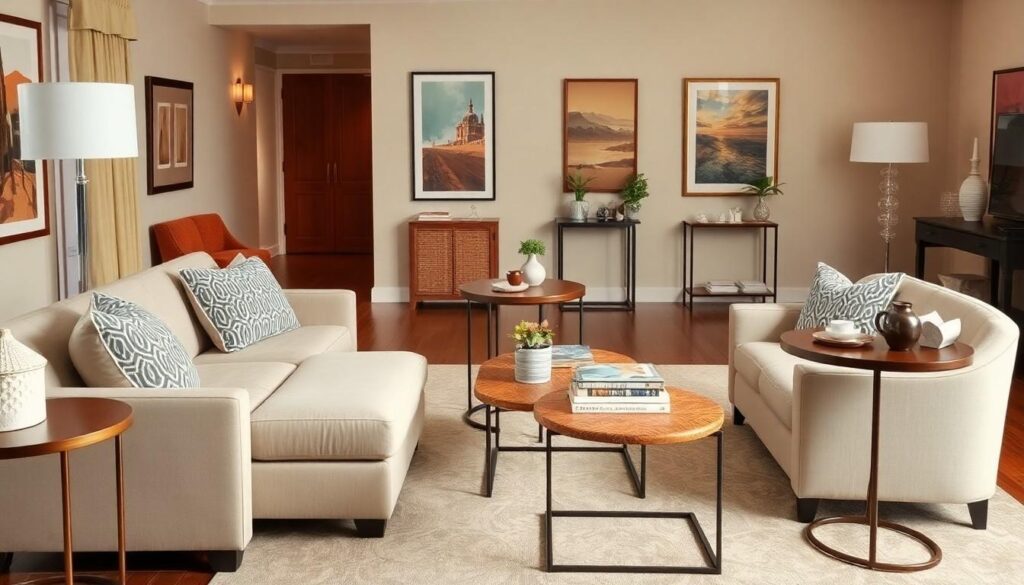
Side tables come in various styles and designs, each suited for specific needs and aesthetics. Exploring the different types helps in choosing the right fit for any living room.
End Tables
End tables, often placed beside sofas or chairs, serve as practical surfaces for drinks or lamps. These tables typically offer a square or round shape, complementing typical seating arrangements. Materials like wood, metal, or glass are common, allowing for easy integration into diverse décor styles. They may also feature drawers or shelves, providing additional storage options. A convenient choice, end tables enhance both functionality and style in living rooms.
Nesting Tables
Nesting tables present a versatile solution for living room spaces. These tables consist of multiple smaller tables that fit together, saving space and offering flexibility. When extra surface area is needed, they can be separated and used individually. They often come in stylish designs and materials, making them an attractive addition to any room. Nesting tables adapt well to varying needs, whether for entertaining guests or providing extra space for décor.
Accent Tables
Accent tables serve as decorative elements while remaining functional. Positioned strategically, these tables create focal points in a room. They come in an array of shapes, sizes, and finishes, allowing for customization based on personal style. Often used to display art or hold books, accent tables enhance the overall aesthetic. Their unique designs add character and charm, making them perfect for complementing existing furniture.
Materials Used in Side Tables
Side tables come in a variety of materials, each offering unique benefits and styles. Choosing the right material influences both the table’s durability and its aesthetic appeal.
Wood
Wood serves as a popular choice for side tables due to its warmth and versatility. Hardwood options like oak, cherry, and maple provide durability and timeless appeal, while softer woods such as pine offer a more rustic look. Stains and finishes allow for customization, enabling homeowners to match their side tables with existing decor. Additionally, reclaimed wood tables add character and sustainability to the space. Wood’s natural grain patterns and textures enhance visual interest, making these tables both functional and stylish.
Metal
Metal side tables add a modern touch and are often lightweight and durable. Stainless steel, wrought iron, and aluminum provide sturdy options that withstand wear and tear. These materials lend an industrial feel while contributing to an open and airy aesthetic. Available in various finishes, such as brushed or polished, metal tables can complement both contemporary and traditional settings. Using metal in designs also facilitates easy maintenance, as many metals are resistant to scratches and stains, ensuring that these tables remain attractive for years.
Glass
Glass side tables offer a sleek and elegant appearance, perfect for creating a sense of space in smaller living rooms. Tempered glass is favored for its strength and safety features, making it ideal for everyday use. Clear glass options keep the visual flow intact, allowing other design elements to stand out. Frosted or tinted varieties also provide interesting contrasts, contributing to creativity in design. Metal or wood bases combined with glass tops create a harmonious blend of materials, enhancing the overall style of the living area while keeping the space feeling open and bright.
Design Considerations
Designing a living room involves careful thought regarding side tables. A balance between functionality and aesthetics ensures a harmonious space.
Size and Scale
Selecting the right size for a side table plays a crucial role in room harmony. Tables must not overwhelm seating arrangements; they should complement the scale of sofas and chairs. Standard heights for side tables generally range from 20 to 30 inches, aligning closely with seating surfaces for optimal access. Widths vary depending on available space; a table that’s too wide can disrupt flow while a too-narrow option may lack practicality. Maintaining a comfortable distance of 12 to 18 inches from seating is essential for easy mobility.
Style and Aesthetics
Matching the side table style with existing décor enhances the room’s visual appeal. Various styles, including modern, traditional, and rustic, provide options for personal expression. Those who prefer a cohesive look may choose side tables that echo furniture finishes or color schemes. Patterns and textures add character, while sleek designs offer a minimalist touch. Bright colors can serve as striking focal points, whereas neutral tones promote a calming atmosphere. Each choice contributes to creating a unified design that reflects personal taste.
Functionality of Side Tables
Side tables provide essential functionality in living rooms, effectively merging practicality with style. They contribute significantly to the overall organization of the space.
Storage Solutions
Effective storage solutions are crucial for maintaining a clutter-free environment. Side tables often feature drawers or shelves, offering ample space to store items like magazines, remotes, or coasters. These features enable easy access while keeping surfaces clear. Specific designs, such as tables with dual levels, maximize storage opportunities without occupying much floor space. Many contemporary designs incorporate hidden compartments, adding a sleek appearance while providing extra storage. Selecting the right side table can significantly enhance both aesthetics and organizational capabilities within the living area.
Multi-Purpose Uses
Multi-purpose uses greatly enhance the value of side tables. They serve as convenient platforms for drinks and snacks during social gatherings. Some designs include built-in charging stations, promoting connectivity while reducing cord clutter. Others function as additional seating, especially in smaller spaces, accommodating unexpected guests. Nesting tables, when combined, create extra surface area for versatile use, allowing homeowners to rearrange their space easily. Emphasizing flexibility, side tables adapt to various needs, ensuring they meet the demands of everyday living while maintaining an attractive decor.
Side tables are more than just functional furniture; they’re essential elements that can elevate the living room’s style and practicality. With a wide array of designs and materials available, homeowners have the opportunity to choose pieces that resonate with their personal taste while enhancing their space.
Whether opting for sleek modern designs or charming rustic styles, the right side table can create a cohesive look that ties the room together. By considering size, placement, and multi-purpose functionality, side tables can seamlessly blend into any living area, offering both beauty and utility. Embracing these versatile pieces allows for a more organized and inviting environment, making them a worthwhile investment in home decor.