Running a commercial space means dealing with foot traffic, spills, and grime that regular janitorial work can’t fully tackle. Deep cleaning isn’t just about appearances, it’s about maintaining a facility that protects employee health, meets code requirements, and extends the life of expensive finishes and equipment. Whether you manage a retail storefront, office building, or warehouse, understanding when and how to deep clean can save thousands in replacement costs and keep your space compliant with health and safety standards.
Table of Contents
ToggleKey Takeaways
- Deep cleaning commercial spaces extends the lifespan of expensive finishes like VCT floors (15–20 years) and carpeting while protecting employee health and ensuring compliance with building codes and health department regulations.
- High-traffic areas like restrooms, break rooms, and entryways require focused deep cleaning attention using specialized techniques such as grout scrubbing, hot water carpet extraction, and floor stripping to remove allergens, mold, and bacteria.
- Proper deep cleaning techniques—including dwell time, top-to-bottom approach, chemical safety protocols, and use of microfiber equipment—prevent re-dirtying cleaned areas and maximize the effectiveness of commercial-grade cleaners.
- DIY deep cleaning works for small spaces under 3,000 square feet with equipment rental costs of $250–$500, while professional deep cleaning is recommended for large facilities, specialized tasks, and compliance documentation.
- Regular deep cleaning creates documented maintenance schedules that prove due diligence during health inspections and can save thousands in replacement costs while improving customer trust and employee morale.
What Is Deep Cleaning for Commercial Properties?
Deep cleaning goes beyond the daily sweep-and-wipe routine. It’s the intensive, scheduled maintenance that targets built-up dirt, pathogens, and wear in areas regular cleaning misses.
In commercial settings, deep cleaning involves disinfecting all high-touch surfaces, stripping and refinishing floors, steam-cleaning upholstery and carpets, degreasing kitchen equipment, and sanitizing HVAC vents. It’s labor-intensive work that often requires specialized equipment like floor buffers, extractors, and commercial-grade steam cleaners.
Unlike routine cleaning (emptying trash, mopping visible spills), deep cleaning is typically done quarterly or semi-annually, depending on facility use. High-traffic businesses like gyms, restaurants, and medical offices may need it more frequently. Building codes and health department regulations in many jurisdictions mandate periodic deep cleaning for food service and healthcare facilities, ignoring these can result in fines or closures.
The goal isn’t just cosmetic. Deep cleaning removes allergens, mold, bacteria, and grease buildup that degrade indoor air quality and surfaces. It also resets finishes: a properly stripped and waxed VCT (vinyl composite tile) floor can last 15–20 years, but only with regular deep maintenance.
Why Deep Cleaning Matters for Your Business
A grimy facility costs more than you think. Carpets that aren’t extracted regularly can harbor mold and dust mites, triggering allergies and absenteeism. Greasy kitchen hoods are fire hazards. Neglected HVAC systems circulate contaminants and drive up energy bills.
Health and safety compliance is non-negotiable. OSHA requires employers to maintain sanitary workplaces, and local health departments inspect restaurants, daycares, and clinics for cleanliness standards. Failing an inspection can shut you down temporarily or permanently damage your reputation. Professional deep cleaning creates documentation (invoices, schedules, checklists) that proves due diligence during audits.
There’s also a financial angle. Regular deep cleaning extends the lifespan of flooring, furniture, and fixtures. Replacing commercial carpeting runs $3–$8 per square foot: hot water extraction cleaning every 12–18 months can double its useful life. Similarly, neglected grout and tile in restrooms eventually require costly replacement, while periodic deep-cleaning techniques keep them intact.
First impressions matter, too. Clients notice scuffed floors, stained upholstery, and dusty vents. A well-maintained space signals professionalism and attention to detail, qualities that influence customer trust and employee morale. If you’re managing office cleaning contracts, deep cleaning should be written into the scope and schedule.
Key Areas That Require Deep Cleaning Attention
Not all square footage is created equal. Some zones take a beating and need focused attention during deep cleans.
Restrooms and Break Rooms
These are ground zero for germs and odors. Daily cleaning handles surface-level issues, but deep cleaning tackles what’s underneath.
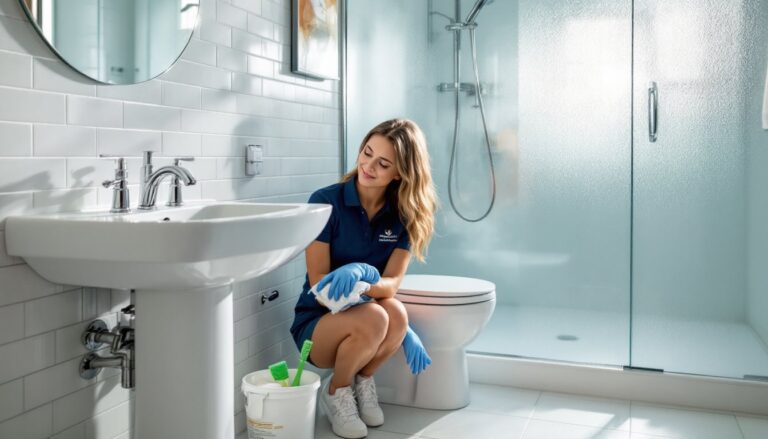
Start with grout lines. Use a stiff brush and alkaline cleaner (pH 10–12) to scrub tile grout in showers, floors, and backsplashes. For stubborn stains, a diluted bleach solution (1 part bleach to 10 parts water) works, but ensure adequate ventilation and wear nitrile gloves and safety goggles.
Toilets and urinals need more than a quick scrub. Remove the seat to clean the hinges and underside. Use a pumice stone on hard water rings (safe for porcelain, but test first). Descale faucets and showerheads by soaking them in white vinegar overnight.
Break room appliances collect grime fast. Pull out the refrigerator to vacuum the condenser coils (dirty coils reduce efficiency by 25%). Remove and wash microwave turntables and vent filters. Clean coffee makers with a vinegar cycle, then run two water cycles to rinse. Following cleaning best practices ensures appliances last longer and run efficiently.
Floors, Carpets, and High-Traffic Zones
Carpeted areas in lobbies, hallways, and offices trap dirt, oils, and allergens. Vacuuming removes surface debris, but deep cleaning requires hot water extraction (often called steam cleaning, though it uses hot water, not steam). Rent a commercial extractor or hire pros, DIY carpet cleaners from big-box stores lack the suction power to fully dry carpets, risking mold growth.
Pretreat high-traffic lanes and stains with an enzymatic cleaner 15 minutes before extraction. Allow 12–24 hours drying time with good airflow (fans, open windows, dehumidifiers). Walk on damp carpet with clean shoes only.
Hard floors vary by material. For VCT or linoleum, strip old wax with a floor stripper solution and a rotary scrubber, then apply 3–5 coats of acrylic floor finish. This isn’t a quick job, budget a full day for a 2,000-square-foot space.
Sealed concrete or epoxy floors in warehouses need degreasing. Use a concrete degreaser and a stiff deck brush or floor scrubber. Pressure washing works outdoors but can damage indoor drains, check your facility’s wastewater rules.
High-touch surfaces, door handles, light switches, handrails, should be wiped with a quaternary ammonium (quat) disinfectant or EPA-registered virucide. Dwell time matters: most disinfectants need to stay wet on the surface for 5–10 minutes to kill pathogens. Read the label.
Essential Deep Cleaning Techniques and Equipment
The right tools make or break a deep clean. Trying to strip a floor with a household mop is like sanding a deck with a nail file, technically possible, but painful.
Floor care equipment includes:
- Rotary floor scrubbers (175–300 RPM models for scrubbing and stripping)
- Wet/dry vacuums or extractors for carpets and upholstery
- Auto scrubbers for large areas (walk-behind or ride-on models)
Renting is smart for one-off jobs. A 20-inch floor scrubber rents for $50–$80/day. Buying makes sense if you’re cleaning multiple properties or doing quarterly maintenance in a large facility.
Chemical safety is critical. Commercial cleaners are concentrated and can cause burns or respiratory issues. Always:
- Wear chemical-resistant gloves, safety goggles, and a respirator (N95 minimum) when mixing or applying strong cleaners.
- Follow dilution ratios exactly. More concentrate doesn’t mean better cleaning, it wastes product and can damage surfaces.
- Never mix chemicals. Bleach + ammonia = toxic chloramine gas. Bleach + acids (like toilet bowl cleaner) = chlorine gas.
- Ensure ventilation. Open windows, use exhaust fans, or work in sections.
Technique tips:
- Top-to-bottom, left-to-right: Start with ceilings, vents, and light fixtures, then walls, then floors. Work systematically so you’re not re-dirtying cleaned areas.
- Dwell time: Let cleaners sit. A degreaser needs 5–10 minutes to break down oils. Wiping immediately wastes effort.
- Two-bucket method: One for cleaning solution, one for rinse water. This prevents spreading dirty water.
- Microfiber over cotton: Microfiber cloths and mop heads capture more dirt and bacteria. Wash them separately in hot water without fabric softener (it clogs fibers).
For upholstery and fabric panels, spot-test any cleaner in an inconspicuous area first. Some fabrics are dry-clean only. Check manufacturer tags (W = water-safe, S = solvent only, WS = either, X = vacuum only). Resources like Martha Stewart’s cleaning guides can help identify fabric types and appropriate methods.
DIY Deep Cleaning vs. Hiring Professional Services
Whether to tackle deep cleaning in-house or hire pros depends on your facility size, staff availability, and budget.
DIY makes sense when:
- You have a small space (under 3,000 square feet).
- You can afford downtime (deep cleaning takes time, don’t try it during business hours).
- You have access to equipment. Renting a floor scrubber and extractor for a weekend costs $150–$250 total.
- Your staff is capable and willing. Deep cleaning is physically demanding.
Cost breakdown for DIY (approximate, varies by region):
- Floor scrubber rental: $60/day
- Carpet extractor rental: $40/day
- Chemicals (degreaser, disinfectant, floor stripper, wax): $100–$200
- Miscellaneous supplies (mop heads, brushes, pads): $50–$100
- Total: $250–$500 for a weekend project
Hire professionals when:
- You manage a large facility (10,000+ square feet).
- Specialized tasks are required (high-dusting in 20-foot ceilings, industrial kitchen hood cleaning, biohazard cleanup).
- You need documentation for health inspections or service pricing transparency.
- Downtime must be minimized. Pro crews work fast and often outside business hours.
Professional costs vary widely:
- Office buildings: $0.10–$0.30 per square foot for deep cleaning
- Retail spaces: $200–$600 flat rate for small shops
- Restaurants: $500–$1,500+ depending on kitchen size and grease buildup
- Medical offices: $0.20–$0.50 per square foot (higher due to sanitation requirements)
Get three quotes and ask:
- Are cleaners bonded and insured?
- What equipment and products do they use?
- Do they guarantee their work?
- Can they provide references from similar facilities?
Some tasks should always go to pros. HVAC duct cleaning requires specialized equipment and knowledge of ductwork layouts. High-pressure washing in multi-story buildings involves fall risks. Biohazard or sewage cleanup (after flooding, for example) requires PPE, proper disposal, and often certification.
If you’re weighing options, consider hybrid approaches. Handle routine deep tasks in-house (carpet extraction, restroom deep scrubs) and contract specialists for annual or complex jobs (floor refinishing, exterior window cleaning). Many businesses looking to expand service offerings start by mastering simpler commercial tasks before tackling specialized work.
Regardless of approach, schedule deep cleaning during off-hours. Wet floors and strong chemical odors aren’t compatible with customers or employees. Most commercial crews work evenings, weekends, or overnight shifts.